How Smart Are Octopuses? A Marine Biologist, a Bestselling Author, and OctoNation Break It Down
Estimated reading time: 15 minutes
Octopuses are among the most intelligent invertebrates (animals without a backbone) on Earth. With nine interconnected brains, around 500 million neurons, and the ability to solve puzzles, use tools, and recognize individual humans, octopus intelligence operates on a fundamentally different architecture than anything else in the animal kingdom!
But how smart are they, really? And what does “smart” even mean when the animal you’re talking about has more brains in its arms than in its head?!
On the Impactually podcast, produced by Humm Productions and hosted by Brooke Bechtold, voices who’ve spent decades thinking about this question jumped on zoom with Brooke and answered all her questions!
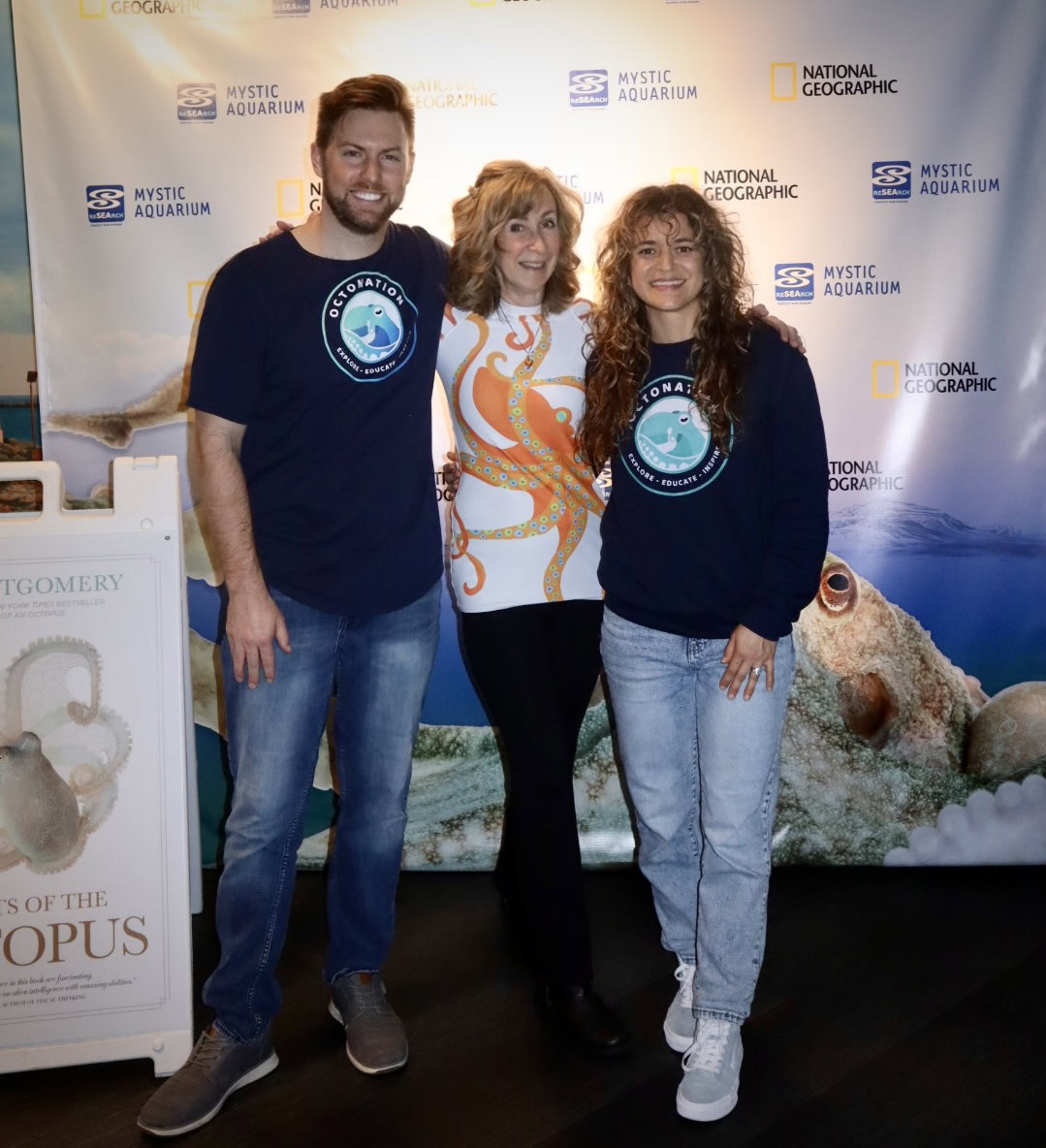
Meet the Octopus Experts:
Sy Montgomery is a naturalist and author of more than 30 books, including The Soul of an Octopus, a National Book Award finalist and New York Times bestseller that changed how millions of people think about animal consciousness.
Dr. Chelsea Bennice, known online as The OctoGirl, is a marine biologist who’s spent over 1,000 hours underwater studying octopus behavior in the wild. She holds a M.S. and Ph.D. from Florida Atlantic University, where she completed postdoctoral research at FAU’s Marine Lab. She’s also a Whitman Center Fellow at the Marine Biological Laboratory in Woods Hole. And she’s OctoNation’s Scientific Advisor!
Warren Carlyle is the founder of OctoNation, the world’s largest octopus fan club (W00t!), and a National Geographic author of Secrets of the Octopus alongside his mentor, Sy Montgomery. He’s been obsessed with octopuses since he was seven years old and is now known as the octopuses PR agent.
As Sy says on the episode: “The existence of OctoNation, I think, is also bringing forth a golden age of octopus appreciation and exploration.”
This is what that golden age sounds like. Listen to the full episode here!
Nine Brains, One Octopus: How Their Intelligence Actually Works
Octopuses have one central brain located behind their eyes and eight additional clusters of neurons, one in each arm, that function as independent processing centers. These “satellite brains” can taste, touch, and make decisions without checking in with the central brain, giving octopuses a decentralized nervous system unlike anything in the mammal world.
Here’s the thing that blows people’s minds about octopus intelligence: it’s not just that they’re smart. It’s where they’re smart. The brain behind their eyes? That’s Central Command. But each of those eight arms has its own cluster of neurons that can operate independently. Think of it like nine post offices: one Central Command and eight satellite offices in each arm.
Warren explains it on the podcast:
“We call them satellite brains because they can communicate amongst each other and don’t need to talk to the central brain. They can make decisions without the main brain.”
So how do you explain that to a kid? Or, let’s be honest, to most adults?
Here’s what Warren said:
“Imagine like you’re watching TV and you tell your arm, go find the remote. And your arm just goes, okay, I got it. And can go out and perform that task without really needing to check back in until it’s found it.”
Your arm just… goes and handles it?! On its own? While you keep watching TV?
YUPP! Who has time for those mundane tasks when you’re a floating protein bar for almost everyone around you in the ocean? That central brain has to focus and use its main brain power for protecting that squishy body!
Now imagine having eight of those arms. All thinking. Tasting with their suckers. Solving problems simultaneously. That’s an octopus!
Octopus Fun Fact: An octopus’s central brain is shaped like a donut, and their esophagus runs right through the middle of it! That means they need to shred their food into tiny pieces before swallowing, because biting off more than you can chew isn’t just a saying when your food has to squeeze past your brain!
Want to go deeper on the brain architecture? Check out our full breakdown of how octopus brains work.
Camouflage Is Intelligence (And Chameleons Aren’t Even Close)
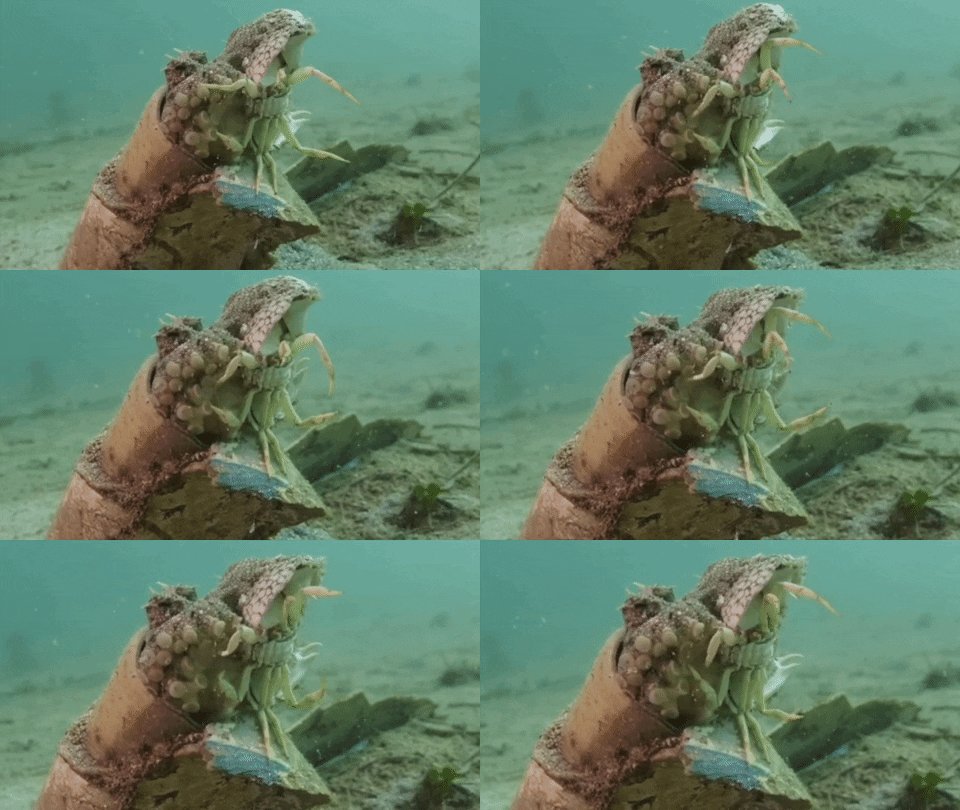
Octopuses can change the color, texture, and posture of their entire body in under one second, making them among the most advanced camouflagers on Earth. This isn’t a simple reflex. It requires real-time visual processing, pattern matching, and the coordination of millions of specialized skin cells called chromatophores (crow-MAT-oh-fores).
We love chameleons. Lizzards are cool. But their camouflage is a screensaver. Octopuses are full-on augmented reality.
Dr. Chelsea Bennice put it perfectly on the podcast:
“We think chameleons might be good at camouflage. Octopuses and their relatives have got them beat. They change their color, they change their skin texture, and they also change their body posture to make up these complex behaviors. And they can change the color of their skin in under one second.”
Under one second.
Think about what that requires. The octopus has to look at its surroundings, process what it sees (colors, patterns, textures, even the angle of light), and then coordinate millions of tiny color-changing cells in its skin to match. All in less time than it takes you to blink.
That’s a real-time calculation happening across the entire surface of their body. And here’s the wildest part: their eyes only have one type of photoreceptor, which means they shouldn’t be able to see color the way we do. And yet they match their surroundings perfectly. Scientists still can’t fully explain how they pull this off.
Can someone please figure this out already!?
Octopus Fun Fact: Octopuses have three types of specialized skin cells that work together for their color-changing superpowers: chromatophores (crow-MAT-oh-fores) for color, iridophores (ih-RID-oh-fores), from the Greek meaning “bearer of rainbows,” for iridescent shimmer, and leucophores (LOO-koh-fores) that act like tiny disco balls reflecting whatever’s around them. It’s like having nature’s version of an 8K, 3D screen for a body.
Read more if you wanna get into it: How octopuses change color
Tool Use: The Coconut Octopus Carries Its Own Shield
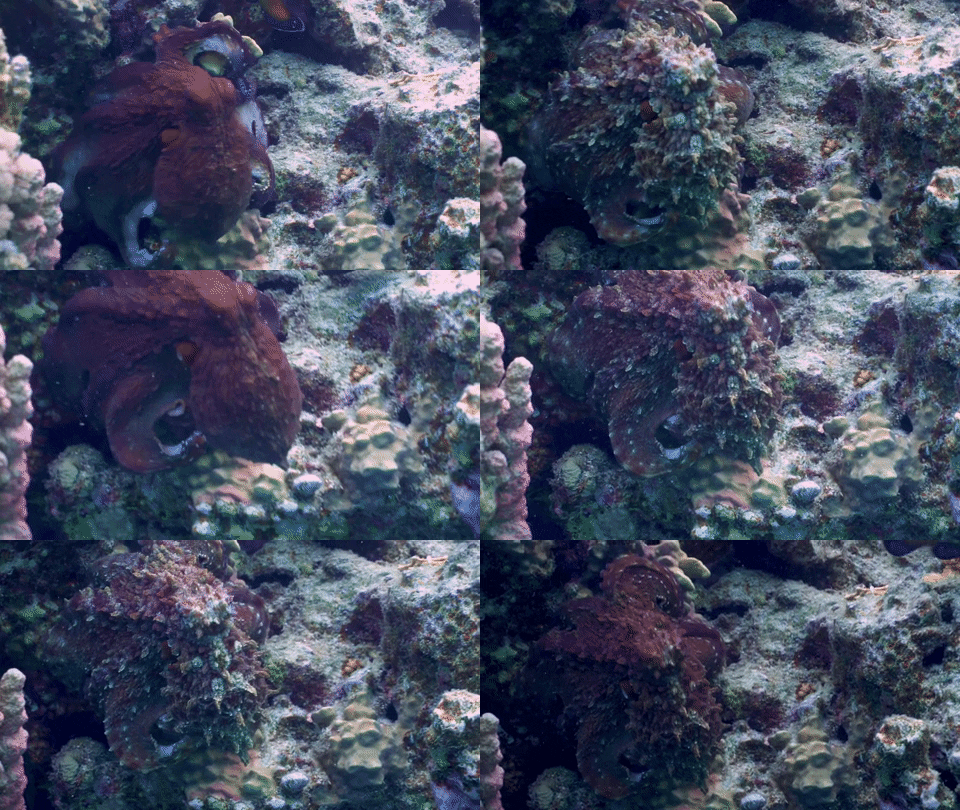
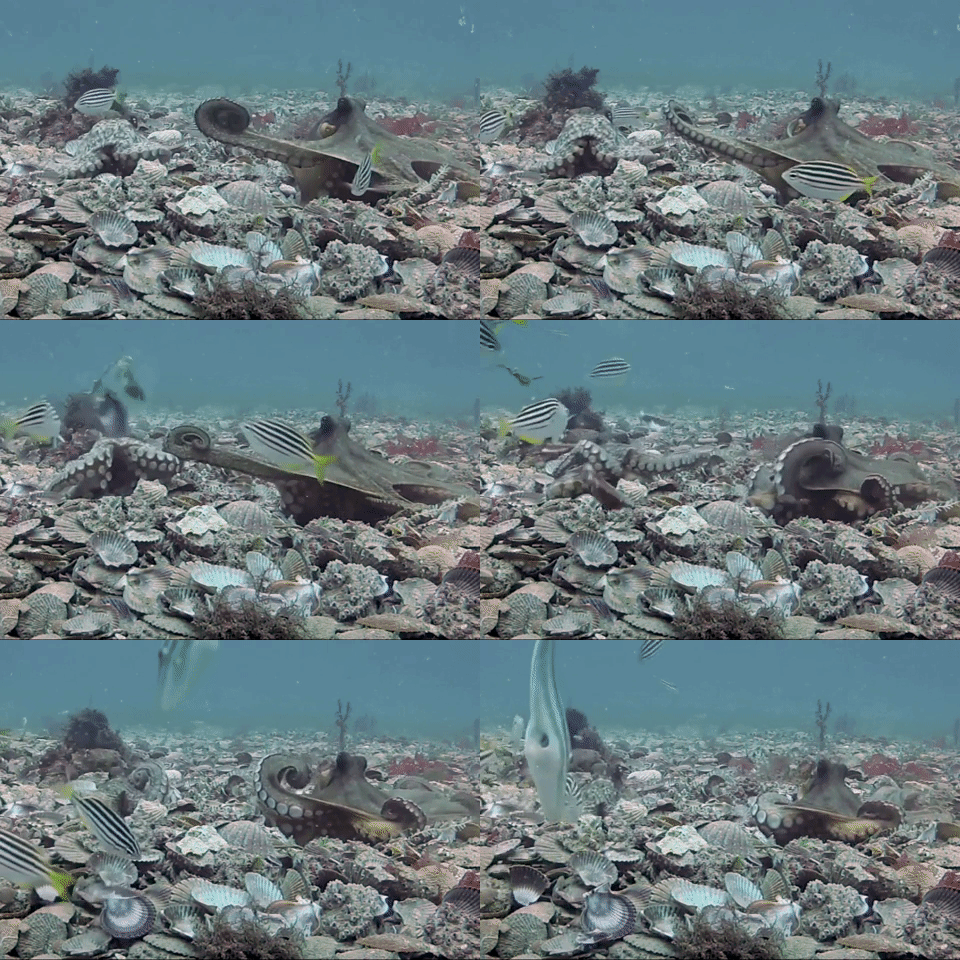
The coconut octopus (Amphioctopus marginatus) is one of the only invertebrates documented using tools. It collects coconut shell halves and clamshells, carries them across the ocean floor, and assembles them into portable shelters when threatened. This behavior demonstrates planning, since the octopus carries the shells before it needs them!
When scientists talk about animal intelligence, tool use is one of the big markers. Crows do it. Chimps do it. Dolphins do it.
And so does a squishy little octopus the size of your hand. Meet the coconut octopus.
Dr. Chelsea Bennice described the behavior on the podcast:
“What the coconut octopus will do is that it will either find coconut halves. That’s kind of where it gets its name from. Or it will find shells from a clam. And it will carry them under their arms. So there could be predators wherever. But it acts as their shield if they need to, so they’re carrying them around. And then if they need a shield or protection, they will then kind of hide inside the coconut halves or the shells or use it as a shield to protect itself from predators.”
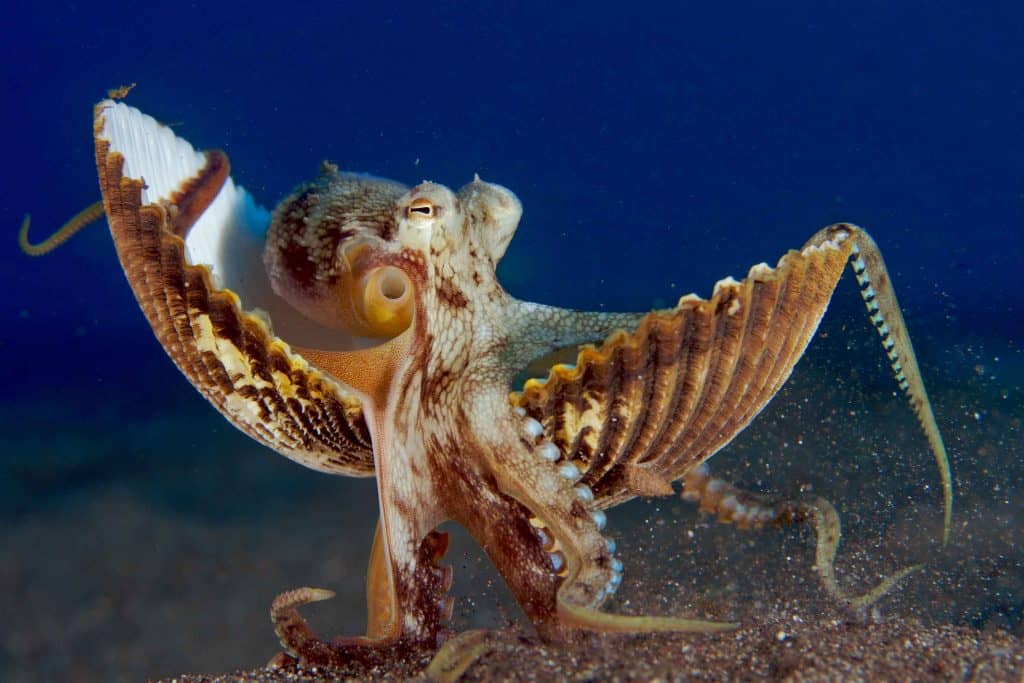
Read that again. The octopus carries the shells before it needs them. It’s not always reacting to threats. It’s planning for one. For an animal with no skeleton and a lifespan of about one to two years…that’s pretty freakin’ cool!
And the way they carry them? They tuck the shell halves under their arms and awkwardly walk across the seafloor on their arm tips. Scientists call it “stilt-walking’ and it’s one of the most impressive things any invertebrate has ever been documented doing! (Octopuses are also known for throwing things at each other and at humans. Versatile & sassy arms, to say the least.)
Every Octopus Species Has a Different Superpower
There are over 300 known species of octopus on this planet, and here’s the wildest part… almost every single one has evolved a completely different survival strategy. It’s like each species read a different chapter of the survival handbook based on their environment and went, “Yeah, I’ll just master THIS.”
Warren walked through some of the most mind-bending examples on the podcast. Let’s take the tour.
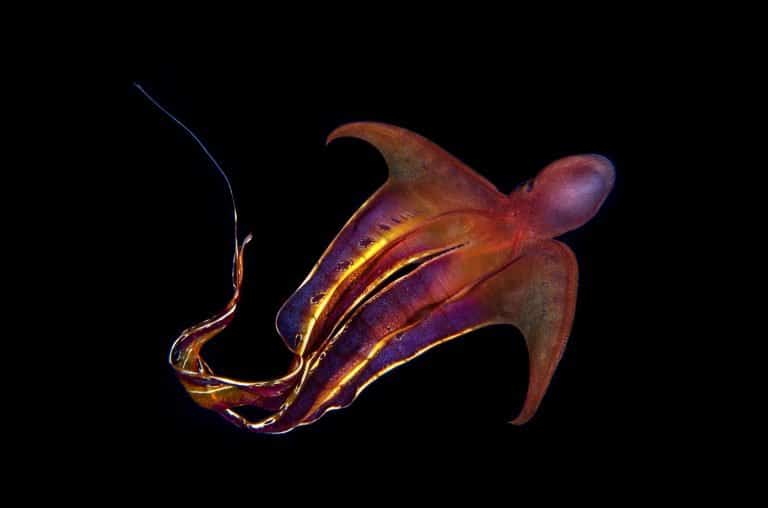
The Blanket Octopus: Superhero With a Shimmering Cape
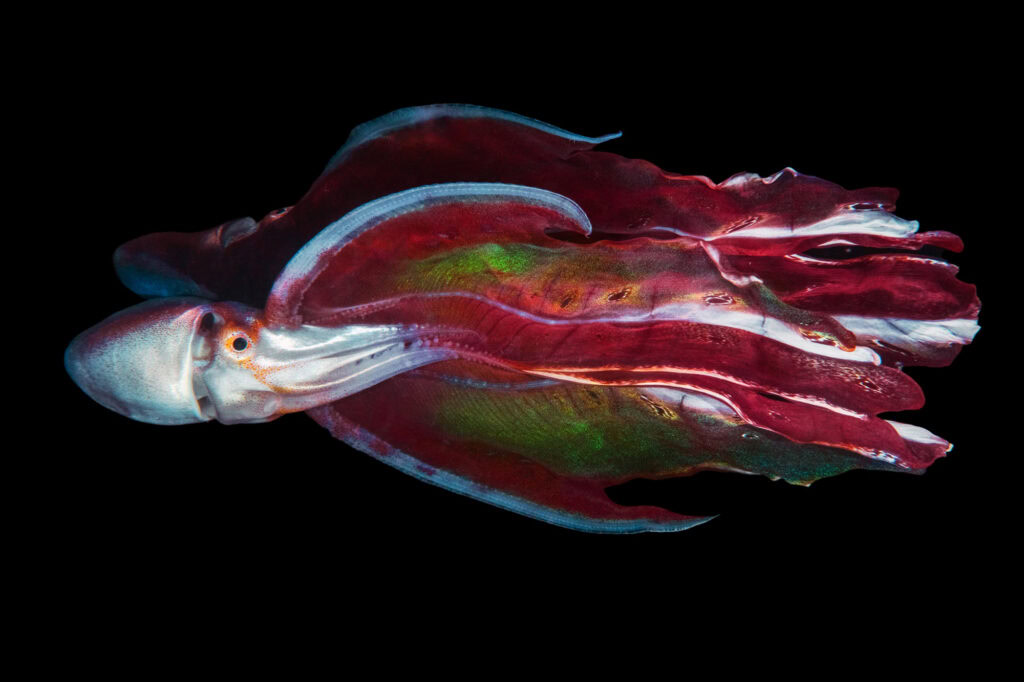
“She literally spends her whole entire life floating through that open ocean. And she’s figured out how to rip the stinging tentacles off of a Portuguese Man o’ War and use them as nunchucks and defend herself in the open ocean against predators.”
Nunchucks. Made from the stinging arms of one of the ocean’s most dangerous animals. She handles the stinging cells without any apparent harm.
And that cape? Warren says it’s not just for show…
“She’s figured out, when I say she, I mean like evolution or whatever you want to call it, has figured out how to grow a cape. And when she is being attacked, she essentially will unfurl that cape and draw the predator to this other billowy object. And she even has perforations, like break lines. She, in her cape, has these biological perforations that if she wants to escape, she can break off parts of her cape so that the predator will go and attack that blanket or that part of the cape so she can protect her organs.”
She literally rips off pieces of herself as a decoy. Built-in biological break lines. Evolution said, “Here, have a tear-away cape.” And she said, “Perfect, make sure it’s rainbow colored too!” lol
Read more: Blanket octopus facts | Octopedia profile
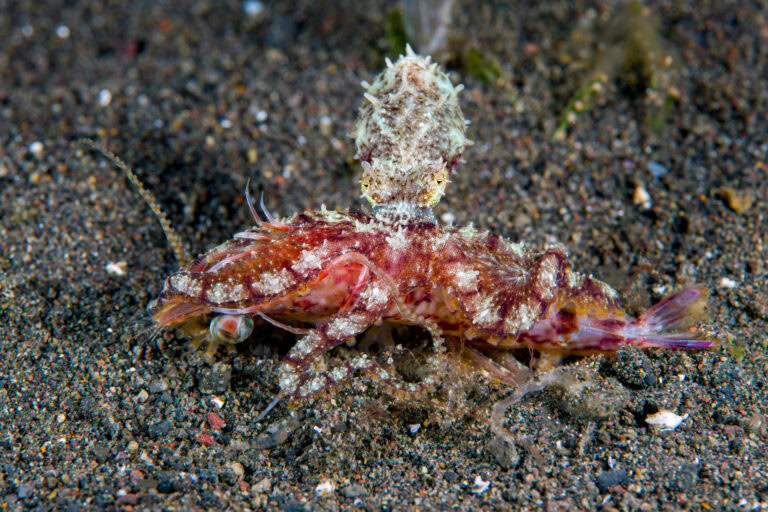
The Sand Octopus: Builds Its Own Fortress in Seconds
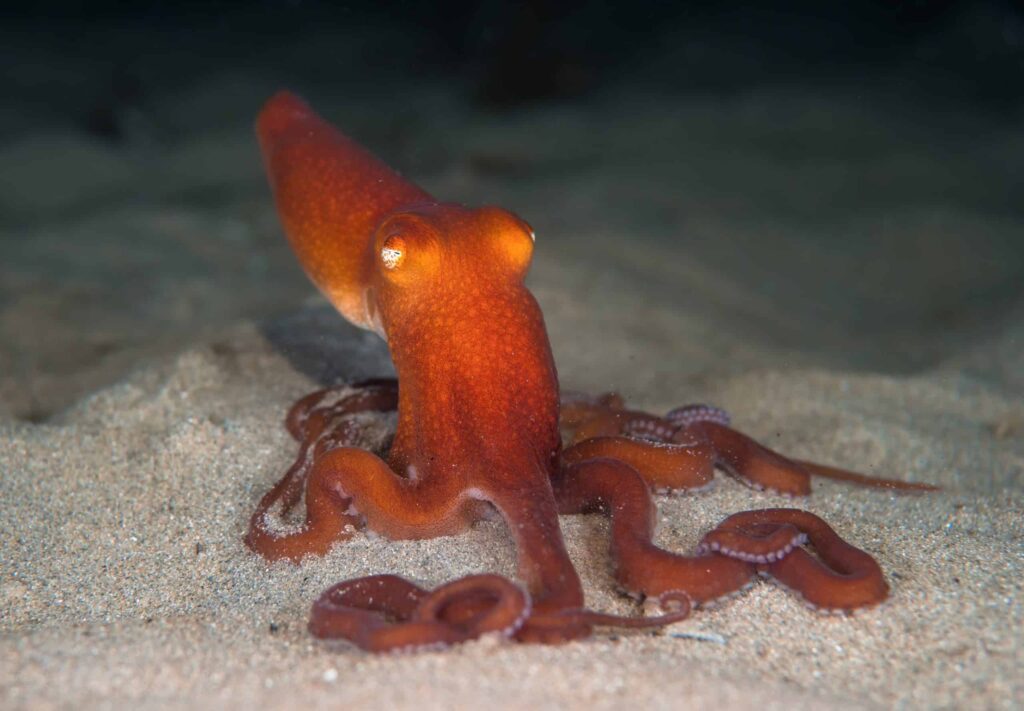
“There’s a species called the sand octopus that over hundreds of millions of years decided, you know, I don’t need to waste energy camouflaging. There’s no point, it’s just sand. And so what happened was they evolved this trait where they blow themselves a foot underground. They secrete a mucus that reinforces the sandy walls around their body. They create a ventilation shaft with one of their arms and then they burrow underground.”
Mucus-reinforced walls. A ventilation shaft. Built in seconds!
Wanna see this in action? Meet the southern sand octopus on Octopedia.
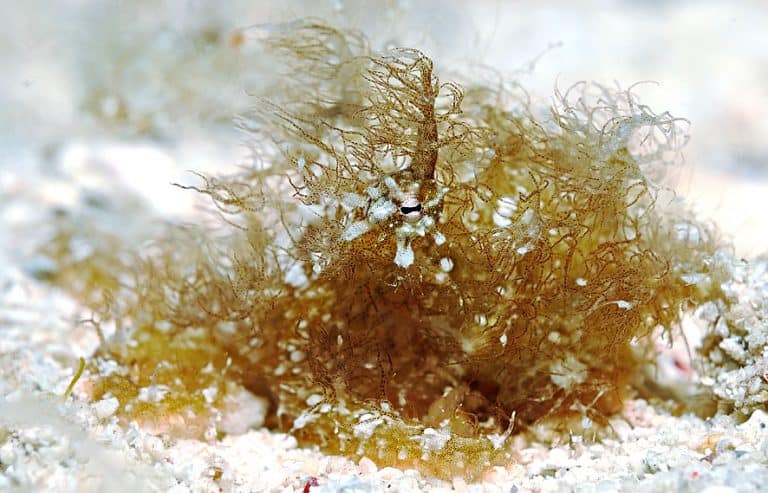
The Hairy Octopus: Floating Seaweed Disguise
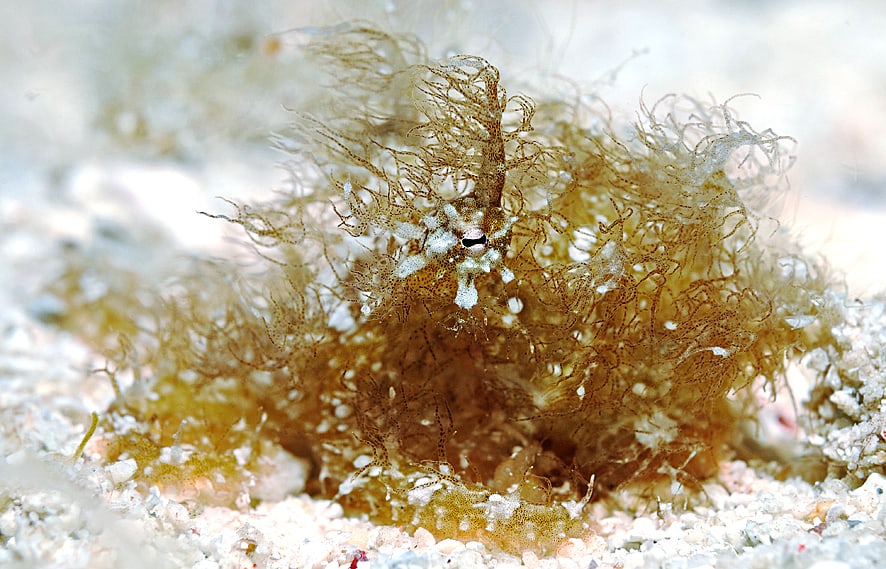
“It’s one of the smallest species and it’s fingernail sized. And what it does is it has this, it’s called papilla. And it’s essentially like these hair-like structures that completely turn them into like what looks like floating seaweed. Like they literally do not look like an octopus.”
Papillae (puh-PIL-ee), from the Latin for “small bump.” These tiny projections cover the hairy octopus’s body and make it look like a scrap of algae drifting in the current. And the hairy octopus doesn’t even swim. It just throws its squishy little body into the current and lets the ocean carry it wherever it goes. Zero energy. Maximum disguise.
The Giant Pacific Octopus: Car-Sized and Clever
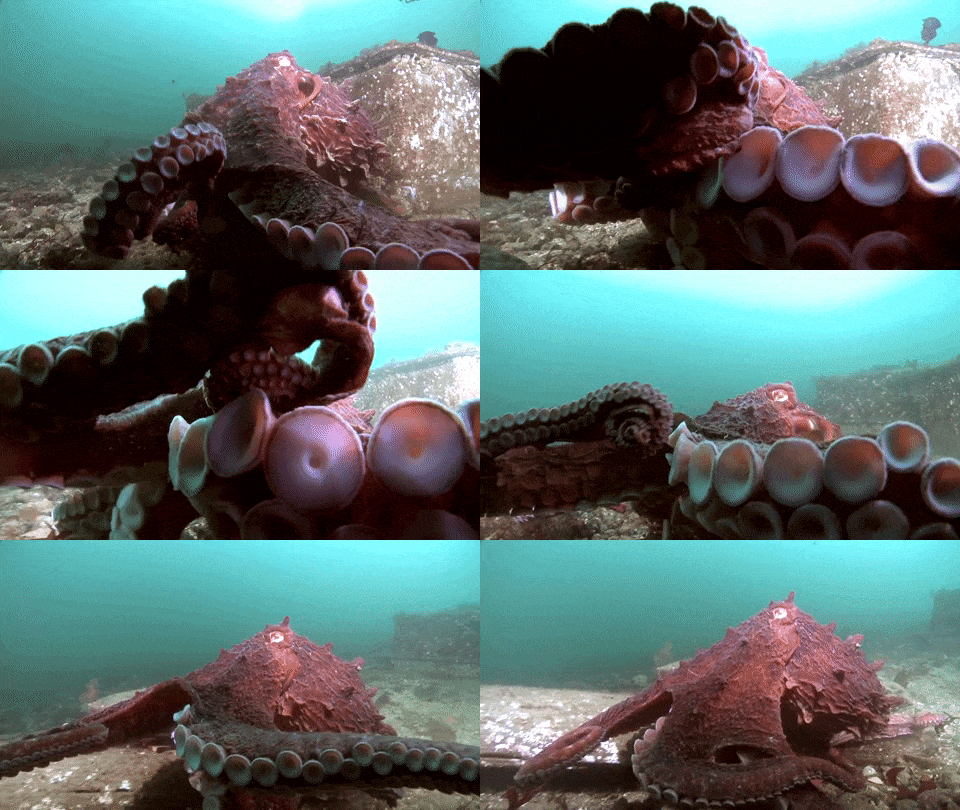
“On the opposite end of the spectrum, you have the largest known species, which is the giant Pacific octopus that can have an arm span of roughly 16 feet, which is like a car size, like a standard car, from arm tip to arm tip, or like a two-story building from arm tip to arm tip.”
Sixteen feet. That’s the length of a standard car. And despite their size, GPOs can squeeze through any opening larger than their beak (the only hard part of their body). An animal the size of a sedan, fitting through a gap the size of a lemon. Pretty epic, huh?
Read more: Giant Pacific octopus facts | Octopedia profile
Do Octopuses Have Feelings? Sy Montgomery’s Goodbye to Octavia
While measuring octopus emotions scientifically remains challenging, behavioral evidence strongly suggests octopuses experience something like curiosity, recognition, and individual preference. Bestselling author Sy Montgomery, who spent years interacting with individual octopuses at the New England Aquarium, describes encounters that changed how she understood consciousness itself.
Meeting Athena
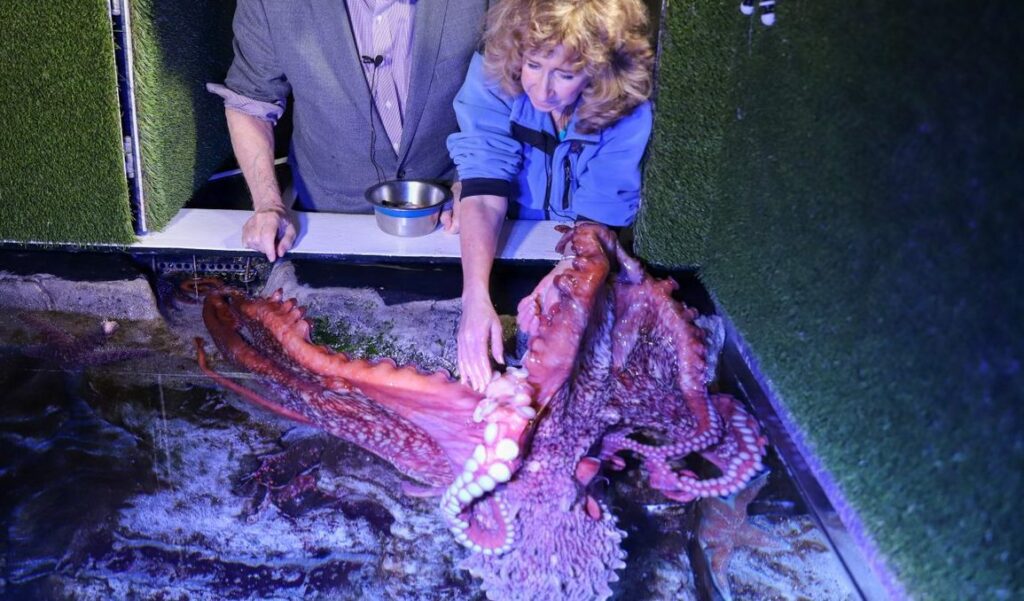
Sy Montgomery didn’t know what she’d find when she leaned over that tank for the first time. She climbed a stepstool. She looked down. And something looked back.
“I mounted a stepstool, and I leaned over the tank, and instantly this gorgeous creature emerged from her lair. She kind of flowed out of this crevice where she’d been hiding and turned bright red with excitement.”
Her name was Athena.
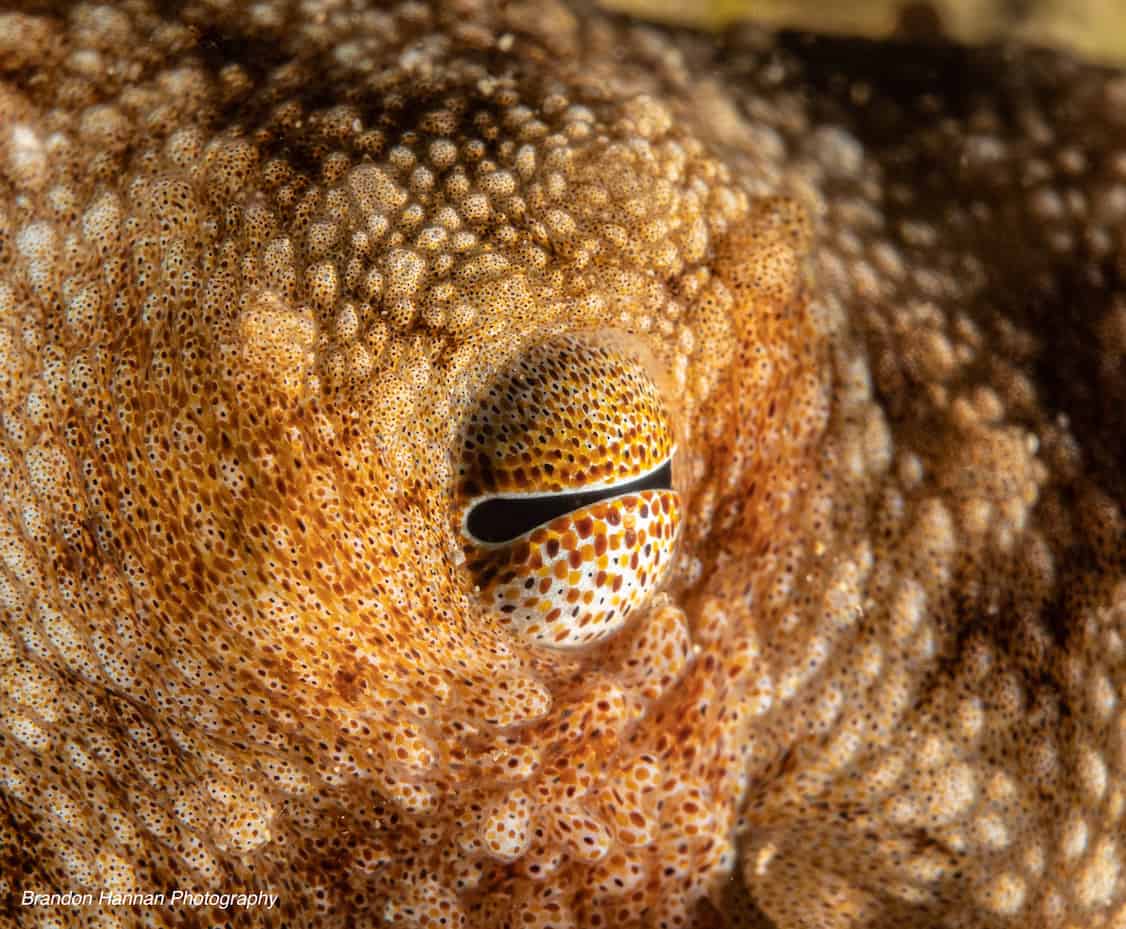
“And I saw her silvery eye. Just two of them, but I could only see one at the moment swivel in its socket and lock onto my face. And I could see this animal was just as curious about me as I was about her. And her silvery suckers were rising to the surface, and she clearly wanted to touch me.
So Sy did what most people would never do. She plunged her hands into the freezing cold salt water.
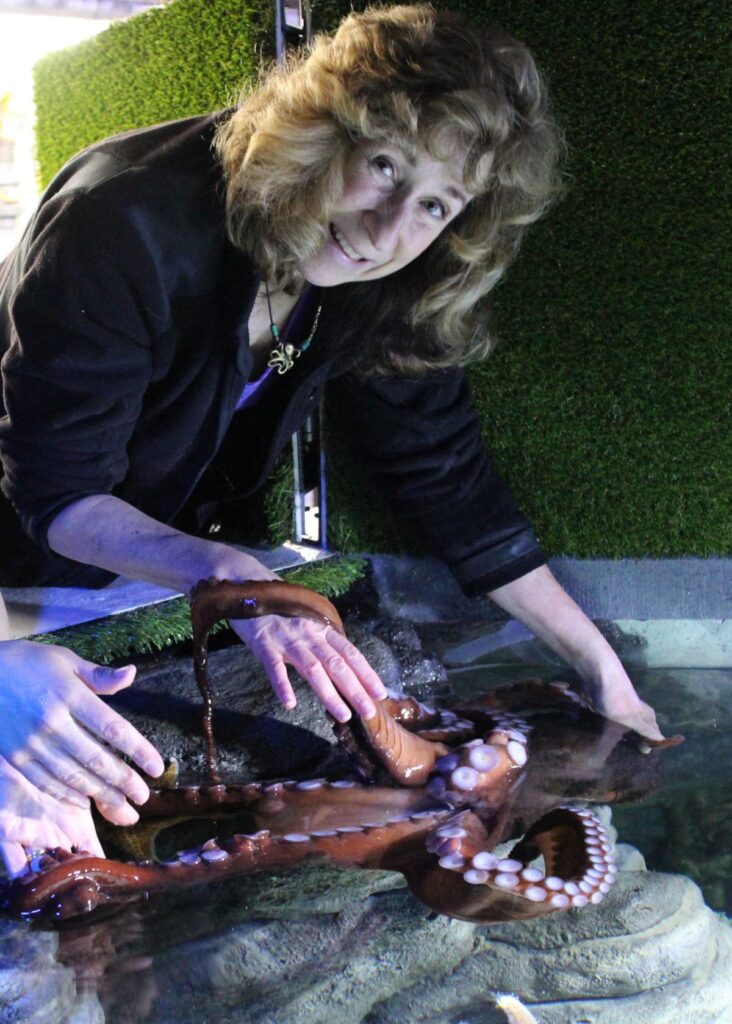
“And soon my skin was covered with these soft, questing suckers who are tasting me as well as feeling me. And I realized that a normal person might have been alarmed or even distressed by this. But I was thrilled because I had this connection with a thinking, feeling being, separated from my kind by half a billion years of evolution.”
Half a billion years. And the connection felt immediate.
That moment, with Athena’s suckers covering Sy’s skin, became the opening scene of The Soul of an Octopus. It’s also the book that inspired Warren Carlyle to found OctoNation. To read about how octopuses see the world through those extraordinary eyes and those taste-sensing suckers, and to feel like maybe, just maybe, the looking goes both ways.
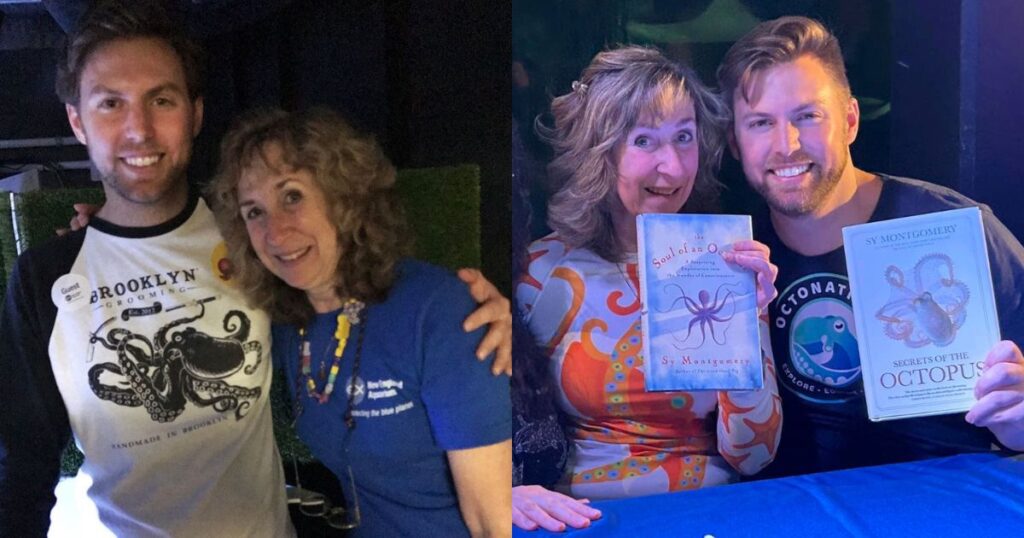
But if Athena was the beginning, Octavia was the goodbye that changed everything.
Saying Goodbye to Octavia
Sy knew Octavia for two years. In that time, the giant Pacific octopus laid eggs. They were infertile (there was no male to fertilize them), but she had no way to know that. So she did what her mother did, and her mother before her, stretching back hundreds of thousands of years. She guarded them.
“What happens with most octopuses is they’re incredible mothers, and they will not leave their eggs. They will not even leave their eggs to hunt. Giant Pacific octopuses, we know, do not leave their lair to hunt and do not eat for the final six months of their lives because they can’t afford to leave their babies. You know, they’ve got to clean them, they’ve got to protect them. They’ve got to fluff them and aerate them.”
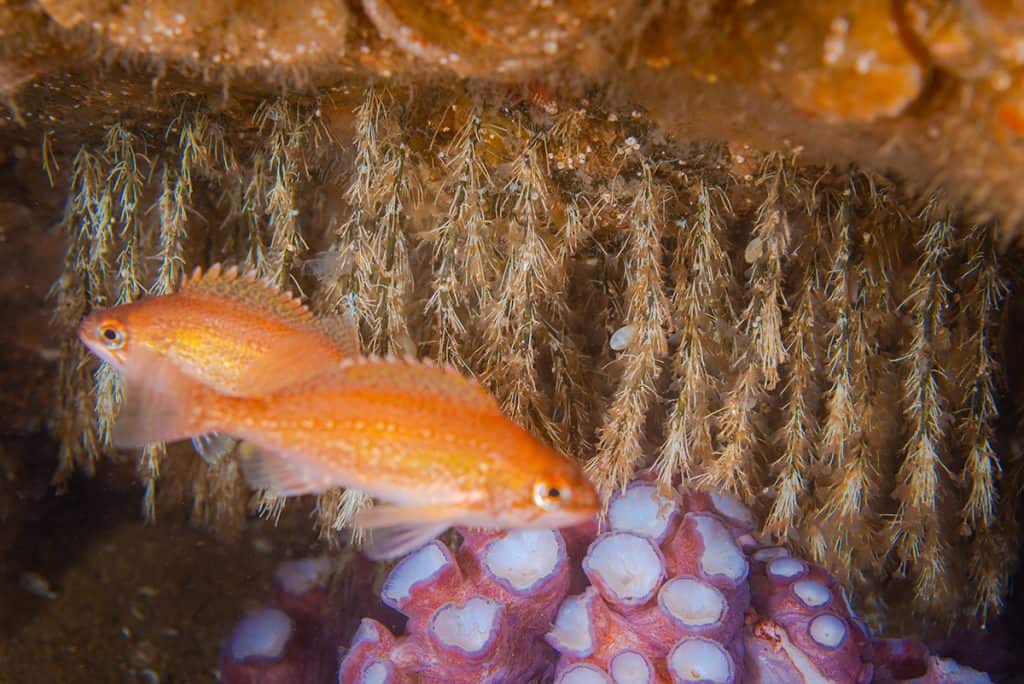
Six months without eating. For babies that would never hatch. One of the most selfless acts in the animal kingdom, programmed into every fiber of their being.
When Sy came to say goodbye, Octavia hadn’t looked up through the water at a human face in ten months. For an animal that lives only three to five years, ten months is like decades.
“She looked up, and even though she was old and she was sick and she was dying, she rose to the top of that tank to see me. She looked into my face, and she reached her arms up to touch and taste me one last time.”
Sy had brought her a fish.
“She took it and just dropped it. She wasn’t interested in eating. She was there to touch me and look at me.”
And then Sy said something that made us emotional…
“I don’t know what was going on in her brain, all the brains in her arms or the brain in her head. I don’t know what was going on in her three hearts. But I know that she made a choice and an effort to come to me at the end of her life. And I also know what this meant to me, which was the world.”
Which was the world.
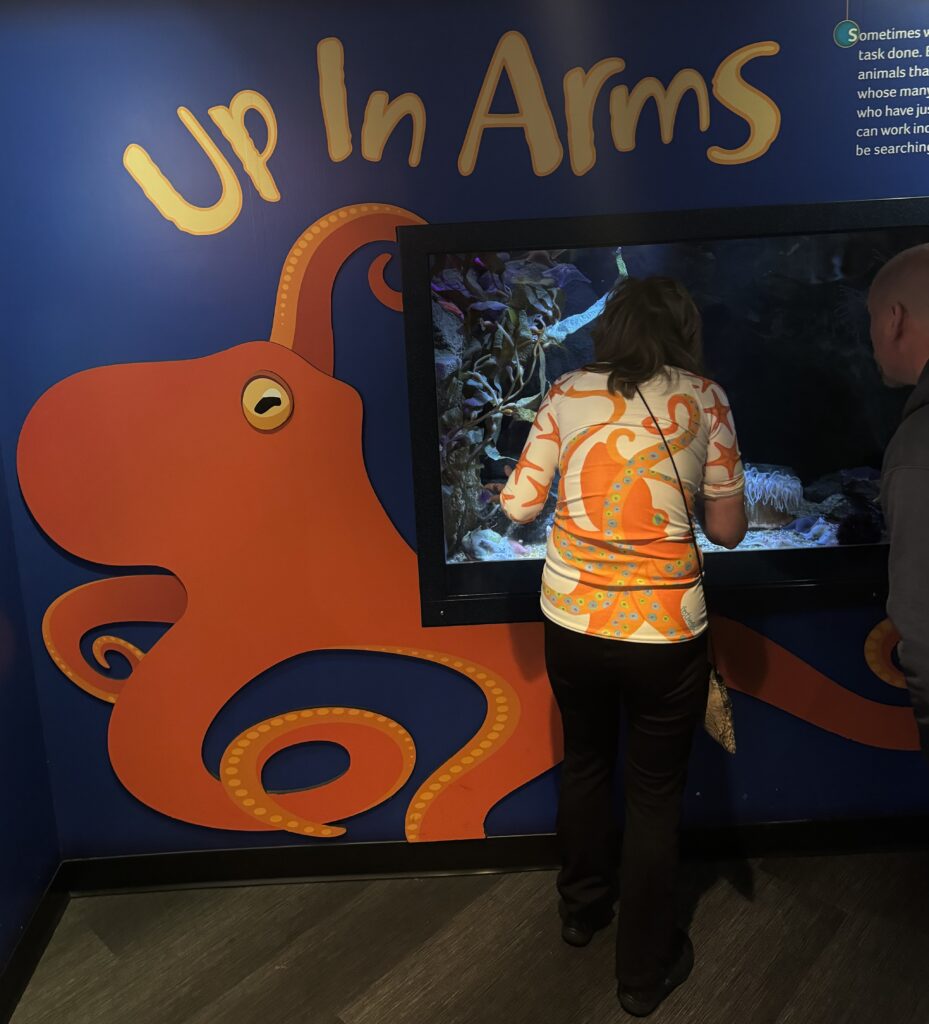
If you’ve ever watched My Octopus Teacher and felt something stir inside you, or wondered whether octopuses truly feel pain and emotion, this is the moment that might answer it. Not with data. With a deeply exhausted Octavia who chose to say goodbye.
OctoNation exists because moments like this one matter. One of the first times that connection across species is real, and that these animals deserve people advocating for them.
We’re a nonprofit. Every species profile, every educational program, every piece of content you read here is funded by people who believe the octopus deserves a better story and an even bigger microphone!
If this episode moved you, consider supporting our work. Every dollar goes toward ocean wonder & literacy. Tap here to donate
Wonder First, Doom Later: Why OctoNation Does It This Way
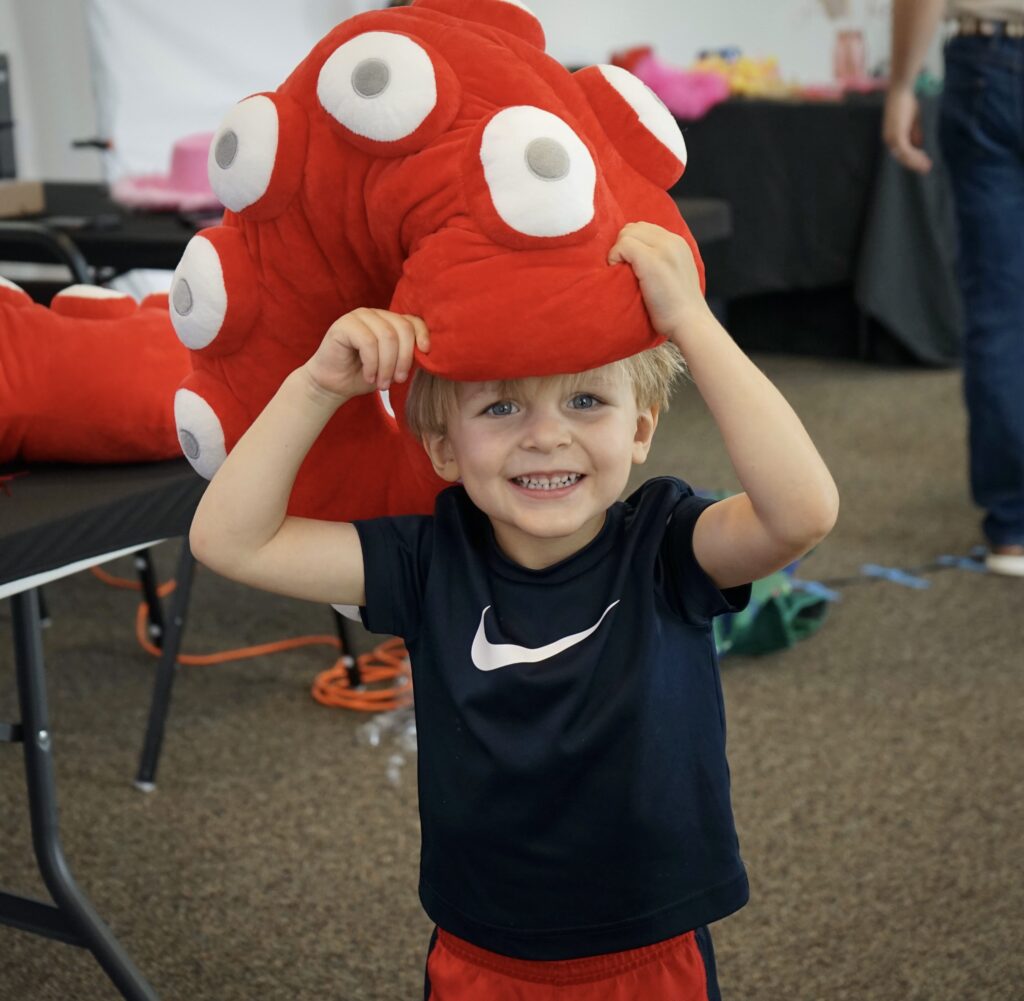
OctoNation’s approach to ocean conservation starts with wonder, not guilt. By making octopus science accessible and exciting, they build the emotional connection that makes people want to protect the ocean, rather than feel helpless about it.
Most ocean nonprofits lead with the crisis. Dying reefs. Plastic islands. It can be overwhelming for most, or at least…it was for him.
Warren has a different philosophy:
“Now with the age of the Internet and decentralization of media, we can have a more nuanced conversation and just get people excited about the wonder before they go straight into the doom and gloom. Because again, that’s just not a good foot to start out on.”
And it works! Warren shared a story on the podcast that says it all:
“I got an email a couple years ago from a mom who was just like, hey, I just want to let you know, we were at a fast food restaurant. My daughter was going to throw away her trash, and she doesn’t know anything about recycling. And she goes, ‘Where do I throw it out so that I don’t hurt the octopus?’”
That’s what wonder does. It doesn’t lecture. It rewires how people see the world. A kid who loves the octopus becomes a kid who cares about the ocean. And that kid grows up.
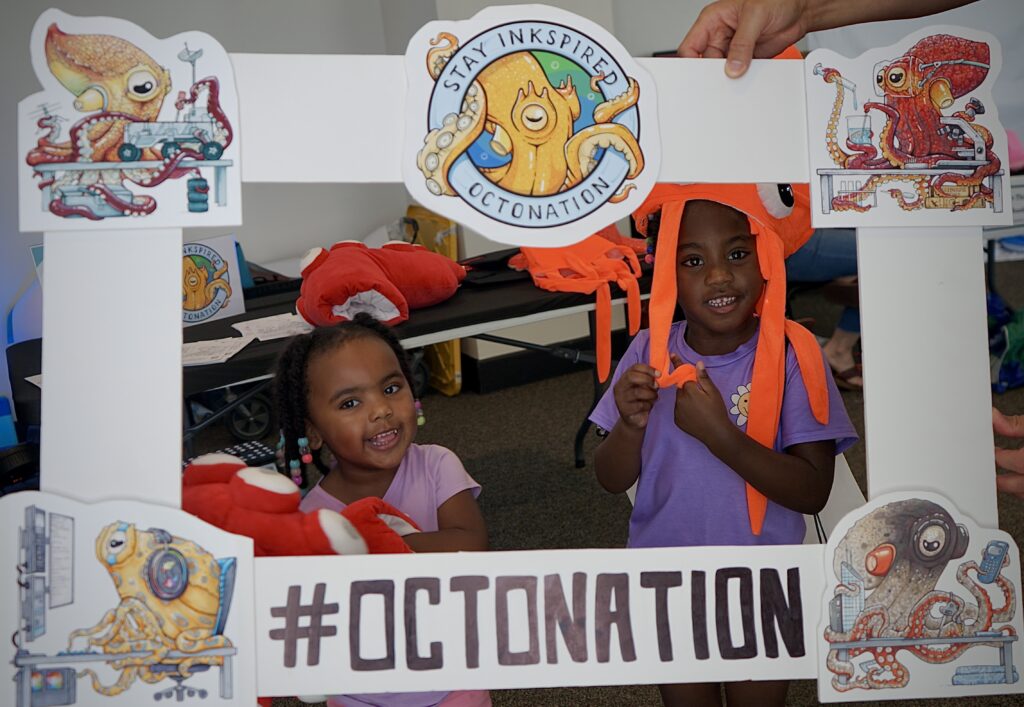
OctoNation’s Octopus Superhero Academy is built on this exact idea. Kids come in thinking octopuses are slimy and weird. They try on spy glasses that simulate an octopus’s 360-degree vision. They learn about camouflage, suckers, and color change. By the end?
“We discovered that by the end of it, the kids were like, the octopus is so cool. The octopus is my favorite animal.”
From “slimy” to “my favorite animal” in one afternoon. That’s what happens when you lead with wonder. Let’s go octopuses, LET’S GO!
The AI Misinformation Problem
But there’s a new challenge.
“If our website is being crawled every single day by AI looking for information, how can we make sure that our information is being pulled and being served up so that when people are writing research papers or are looking for information, it’s being pulled from an accurate source? Because there’s so much wrong information about the octopus online, and there has been for years. And a lot of the AI models are trained on octopuses as food, not an actual octopus model.”
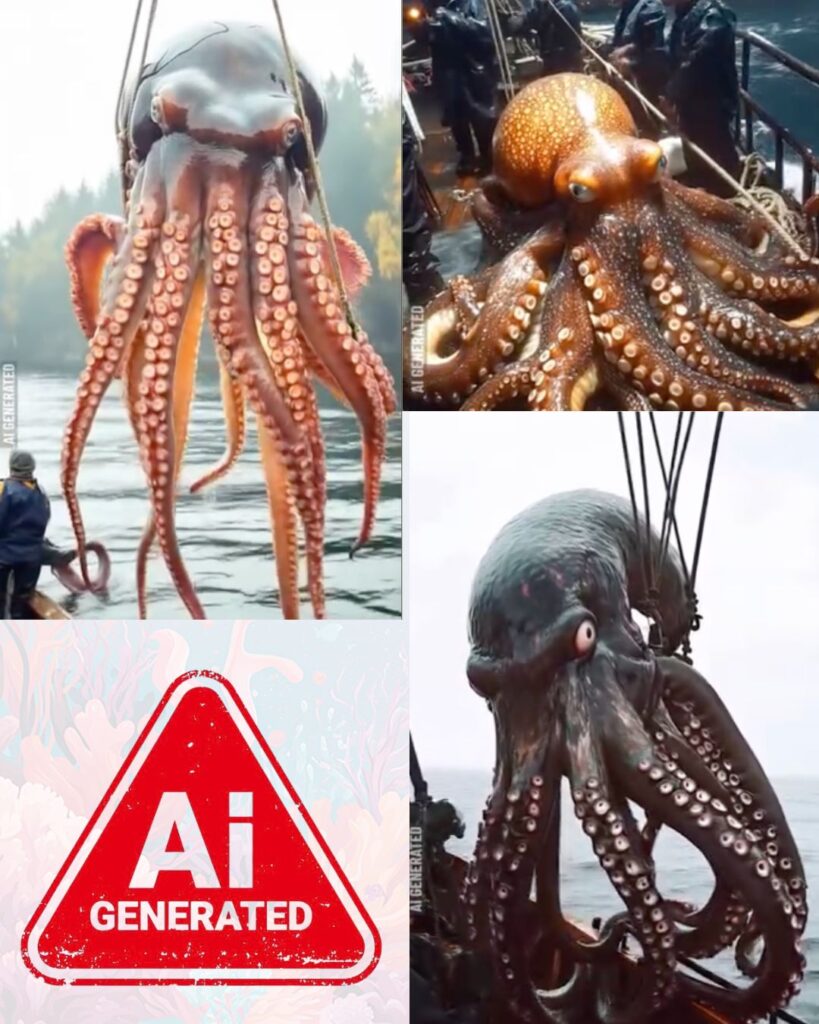
Fake viral photos. AI-generated octopus images going viral with zero scientific accuracy. It’s a problem. And it’s why we built Octopedia.
“There’s not a comprehensive field guide of octopus species online. It doesn’t exist. Like, the Audubon Society has these books of birds that are beautifully categorized and that have descriptions and whatever. I was like, there’s nothing that’s equivalent to that for an animal that’s been on this planet for hundreds of millions of years.”
And as Sy reminds us, the teachers have always been there. We just had to learn to recognize them:
“Animals are always there as our teachers. The problem is we expect our teachers to be in the front of the classroom. We expect our teachers to look and be a certain way. We forget that there are teachers all around us. When the student is ready, the teacher will appear.”
For Warren, his octopus teacher appeared when he was seven. Now, for over a million people who follow OctoNation, that teacher shows up in their feed every single day!
Listen to the Full Conversation
This post only scratches the surface. The full episode covers OctoNation founder Warren’s origin story, Sy’s first encounter with an octopus named Athena, Dr. Chelsea Bennice’s fieldwork studying octopus behavior in the wild, and how OctoNation grew from a childhood obsession into the world’s largest octopus fan club with over 1.2 million followers!
Warren said something that might inspire you to do your thing:
“Octopus need a better story. They need a better cheerleader. And I was like, now that I know how to do this, maybe I could be the one.”
Listen Now!
Produced by Humm Productions. Created and hosted by Brooke Bechtold, Executive Producer.
Featured music: “The Ghost I Called” by The Lonely Parrots, from their LP Nomad. Songwriting by Max Embers and Rachel Siegel. Available on all major streaming platforms.
Financial support for this episode provided to Humm Productions by April Collins Potterfield, David Johnson, Christine O’Neill, JLB Images, and listeners like you.
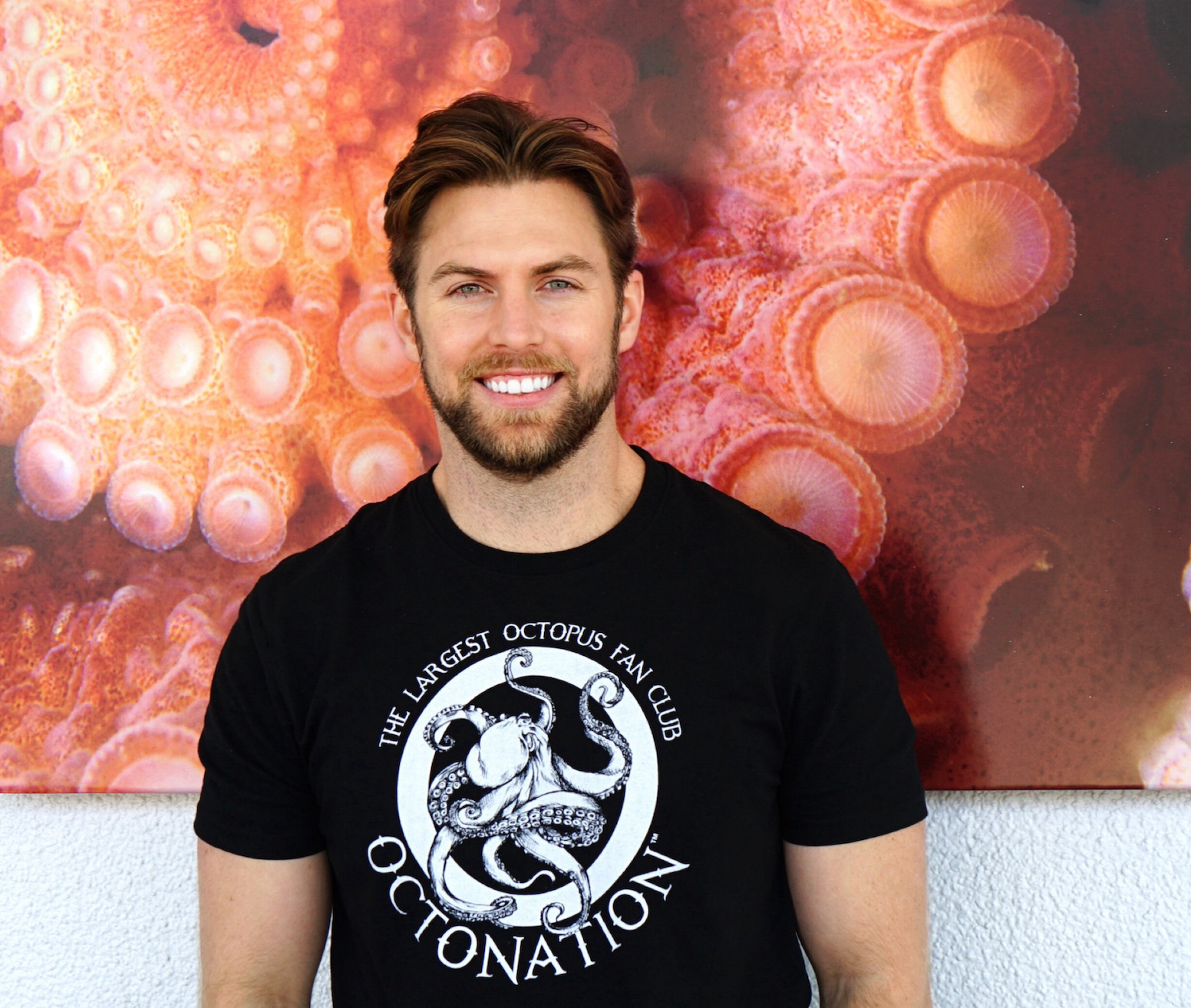
Warren Carlyle is an internationally recognized octopus expert and founder of OctoNation, the world’s largest octopus fan club and nonprofit organization dedicated to octopus education.
Dubbed the “OctoKing” by Sy Montgomery and featured as a co-author on National Geographic’s SecretsOfTheOctopus.com, Warren has spent over a decade making octopus science accessible and entertaining for all ages.
As the Octopus’ PR agent, Warren regularly collaborates with hundreds of underwater photographers, marine scientists, artists, and aquarists to create engaging, research-backed content that reaches millions monthly.
As Jacques Cousteau said, “People protect what they love.”OctoNation’s community of over 1 million members couldn’t agree more. 🐙Want to get involved? Email Warren at [email protected]