Can an Octopus Imagine? Creativity in Deception and Problem-Solving
Editor’s note: This is Part 2 of Dr. Alex Schnell’s Clever Cephalopod Chronicles! Part 1 laid out the four pillars of octopus intelligence and explored the first, behavioral flexibility. Alex is a marine biologist, comparative psychologist, National Geographic Explorer, and host of Secrets of the Octopus!
Late at night, in a quiet living room, an octopus sleeps in her tank.
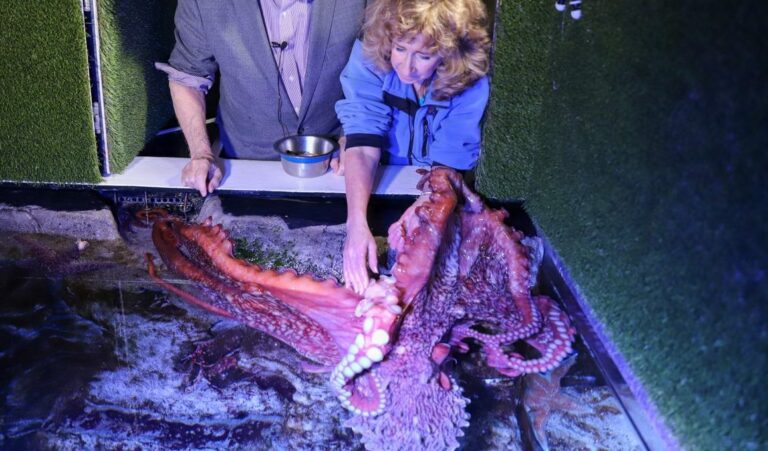
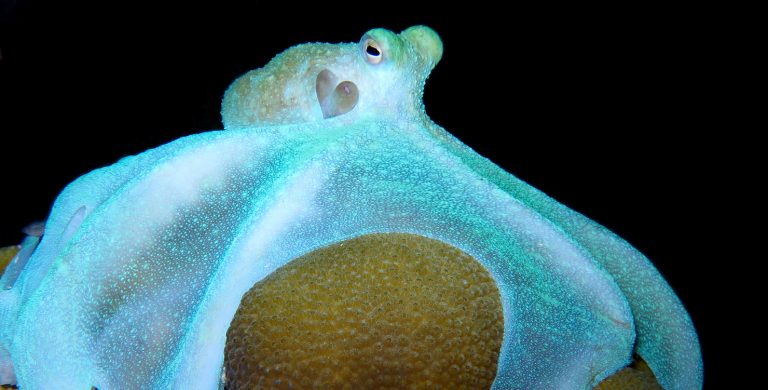
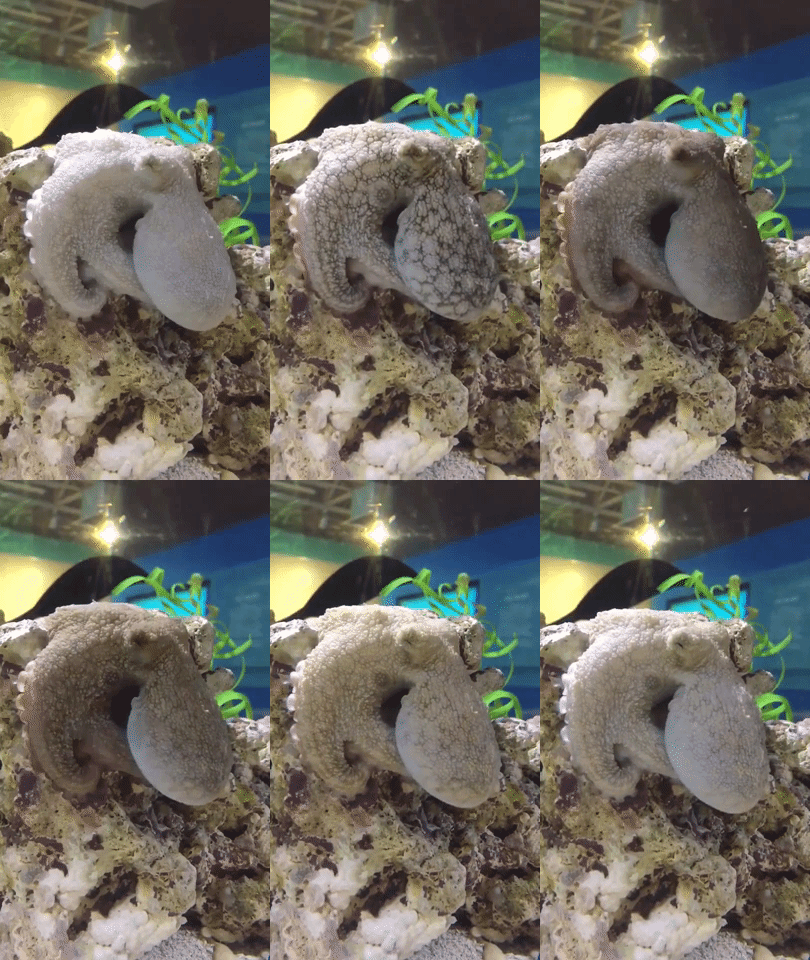
Her name is Heidi, and she lives in the home of a marine biologist David Scheel. Her skin is pale and her body still. Then this quiet sleep phase begins to change. Waves of color ripple across her body – soft yellows, then mottled browns, back to white, then flashes of deep red that seem to arrive without any obvious external trigger. In her home tank, there is no predator nearby and no crabs to pique her curiosity. And yet, her skin color keeps changing.
This moment was captured by NOVA/PBS in the documentary The Octopus in My House, and it raised an irresistible question: Are these colors merely brain static, or could they be something more – internal imagery, memory replay, perhaps even dreaming?
Do Octopuses Dream? What Heidi’s Sleeping Skin Suggests
Scenes like this have taken on new significance in light of recent research on octopus sleep. Studies suggest that octopuses cycle between two distinct sleep states: a quiet phase, marked by stillness, pale skin, and constricted pupils, and an active phase characterized by twitching arms, rapidly shifting skin colors, and rapid eye movement (Medeiros et al. 2021; Pophale et al. 2023). This active state closely resembles REM sleep in mammals – the phase most strongly associated with dreaming.
We can’t yet know for sure whether octopuses dream. We know high-quality sleep is vital across the animal kingdom – it’s when the brain recharges, stores memories, and processes the day’s lessons. If an octopus’s brain is busy consolidating its experiences while it rests, those experiences could shape what happens when it wakes up.
Let’s continue our journey of the Clever Cephalopod Chronicles by exploring the second pillar of intelligence: Imagination.
🐙 A note from OctoNation: Wondering what Heidi was dreaming about is exactly the kind of question OctoNation exists to chase! If this article sparks that wonder in you, supporting OctoNation keeps science like this free for everyone.
What Does Imagination Mean for an Octopus?
In humans, imagination is often associated with art, storytelling, or fantasy. In science, however, it has a more precise meaning. Imagination involves the ability to generate novel strategies or representations that are not directly tied to immediate sensory input. It allows an animal to go beyond reflexive responses – to simulate, anticipate, deceive, or invent.
Imagination doesn’t require language or abstract symbols. It can emerge through behavior: in how an animal solves problems, manipulates the environment, or deploys strategies that appear flexible, creative, and context-dependent.

Among cephalopods, octopuses and cuttlefish in particular, such behaviors are well documented, and in some cases, unusually elaborate compared to what we see in many other animals.
Mimic Octopus: How Does It Choose Its Disguise?
One striking example comes from the mimic octopus (Thaumoctopus mimicus). Unlike most animals that rely on a single strategy to escape predators, these octopuses can adopt the appearance and movements of other animals – lionfish, sea snakes, and flatfish (Norman et al. 2001; Hanlon et al. 2008). Each mimicry appears to be chosen to suit the context. For example, when territorial damselfish nip at its flesh, the octopus will retract six of its arms, bury them in the sand, and extend two boldly striped arms to mimic a sea snake — a known predator of damselfish and their eggs. This precise matchmaking suggests that the octopus may be responding not only to the threat itself, but to how its observer is likely to react, choosing a disguise that makes the attacker retreat.
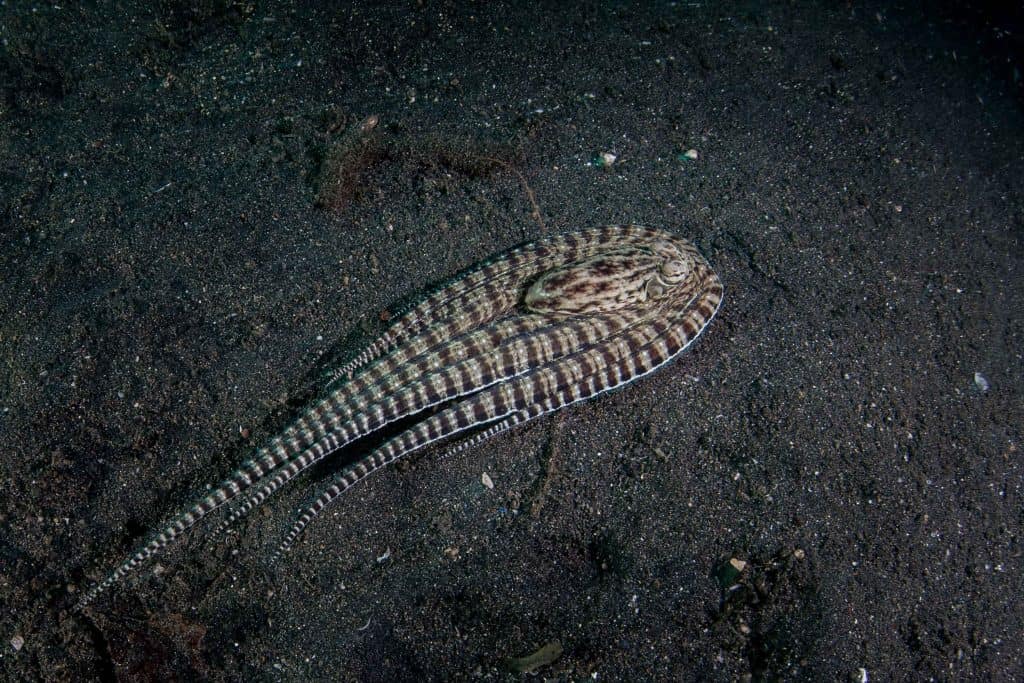
The behavior goes beyond simple camouflage. The mimic octopus appears to assess the threat, draw on the appearance and movements of another species, and project that identity convincingly. As a result, this strategy could reduce aggression and create an opportunity for the octopus to escape. The way it changes its display to suit the situation hints at a capacity for creative decision-making, or at least strategies that resemble the kinds of imaginative thinking we see in other brainy animals.
Coconut Octopus: Why Carry a Shell You Can’t Use Yet?
Imagination can also emerge in problem-solving, especially when animals manipulate objects in novel ways. The coconut octopus (Amphioctopus marginatus) provides an intriguing case.
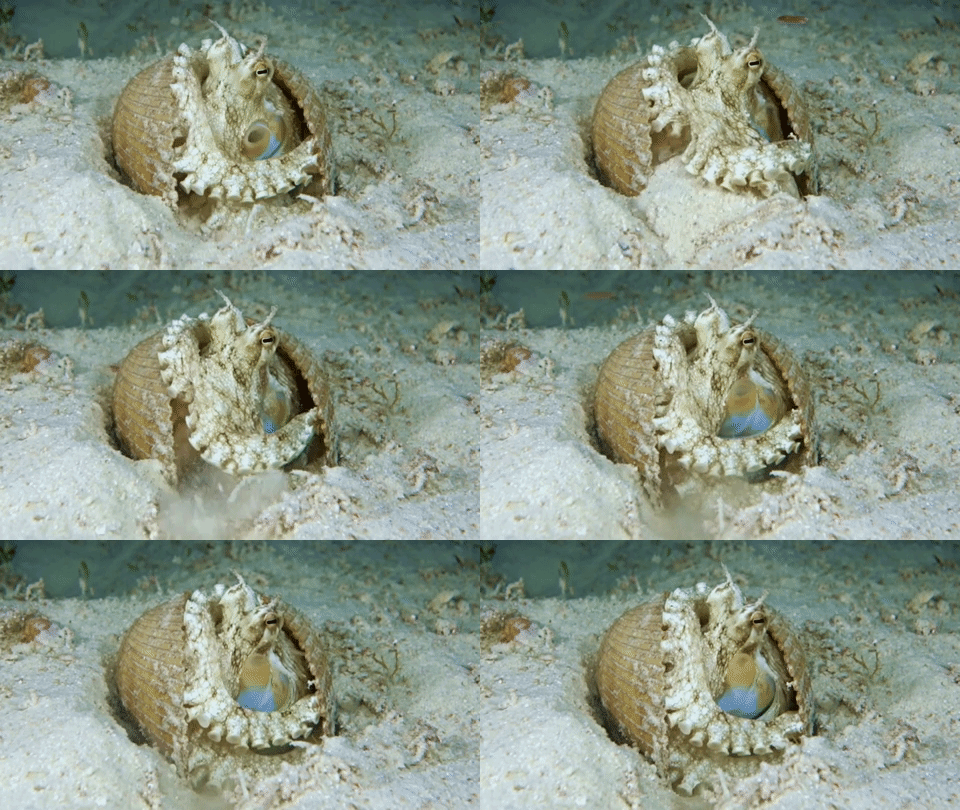
This octopus has been observed collecting discarded coconut or clam shells, carrying them across the seafloor in an awkward, stilt-like walking fashion – a behavior scientists dubbed “stilt-walking” – and assembling them into makeshift portable shelters (Finn et al. 2009). At the time a shell is picked up and transported, it does not offer immediate protection. Its usefulness depends on how it might be deployed later, in a different context. Researchers have suggested that the behavior may reflect thinking ahead, although it is not yet clear whether this involves deliberate planning or learned behavior shaped by experience.
Octopuses also appear to be able to use objects in ways that vary with the situation. While filming Secrets of the Octopus, I witnessed a coconut octopus retrieve a clam shell and use it as a moveable shield to fend off a highly aggressive mantis shrimp. Instead of retreating inside the shell for safety, the octopus gripped it like a buckler, holding the hard barrier firmly between itself and the attacker as the two battled it out.
The shell had become something else entirely: not a shelter, but a shield. That ability to treat objects in terms of their potential – rather than their typical function – captures something central to imagination as scientists understand it: the capacity to generate solutions that are not dictated solely by the present scene, but by what might be possible.
🐙 Octopus Fun Fact: While a coconut octopus is carrying a shell, the shell protects nothing. It only becomes a shelter once the octopus stops and assembles it. Carrying it even forces a clumsy gait researchers named “stilt-walking.” Paying that cost now for a payoff later is exactly why Finn and colleagues classed the behavior as tool use (Finn et al. 2009).
Why Do Octopuses Hunt With Fish (and Punch the Ones That Cheat)?
Imagination is often assumed to matter most in highly social animals. Octopuses, by contrast, are typically described as solitary. And yet, some species show a surprising capacity to coordinate their behavior with others – including animals from entirely different classes.
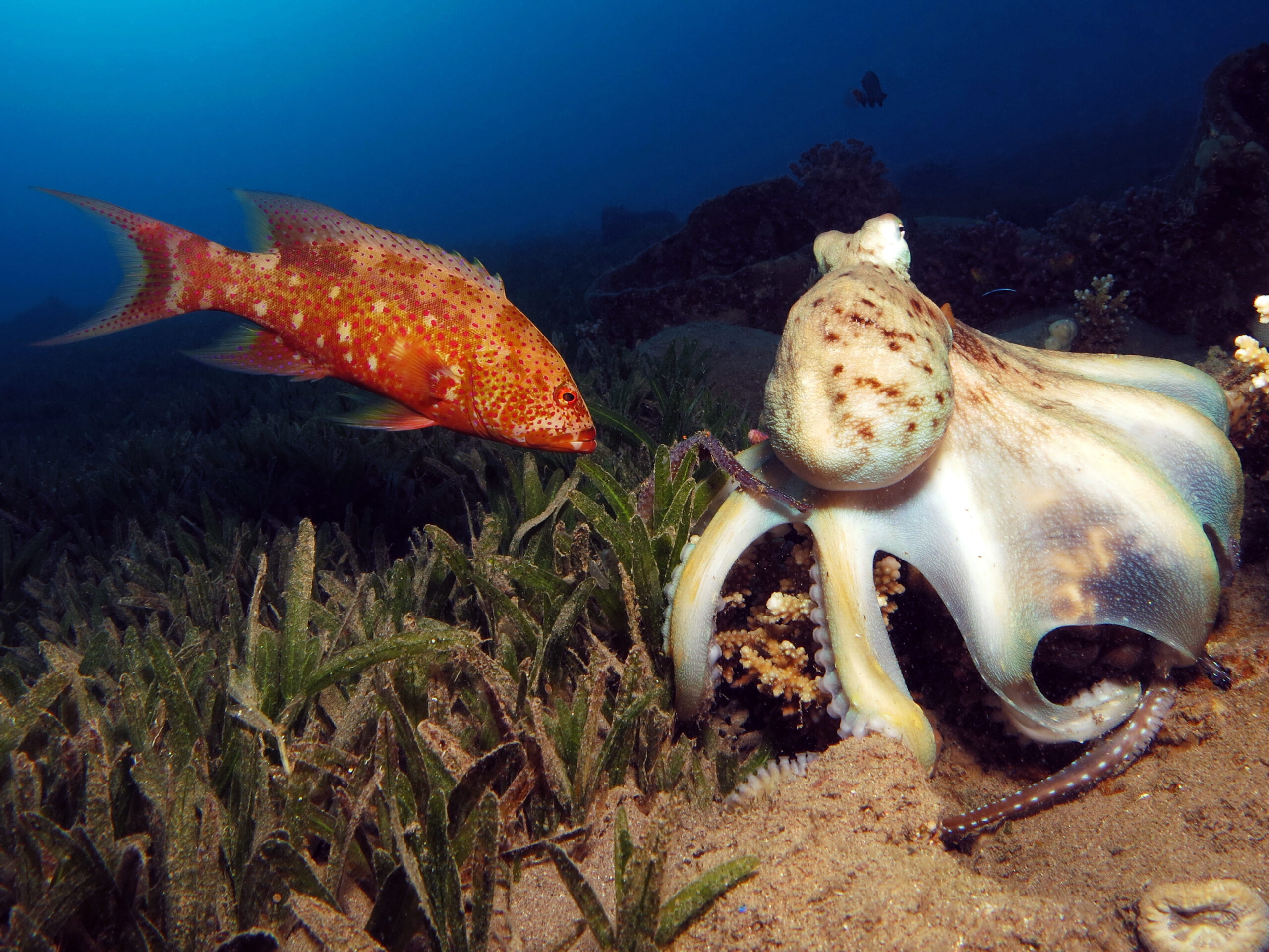
The Hawaiian day octopus (Octopus cyanea) has been observed hunting alongside reef fish such as the coral trout. In these encounters, the fish uses a headstand to signal the location of hidden prey, then the octopus uses its flexible arms to flush out potential meals for the dynamic duo (Vail et al. 2013).
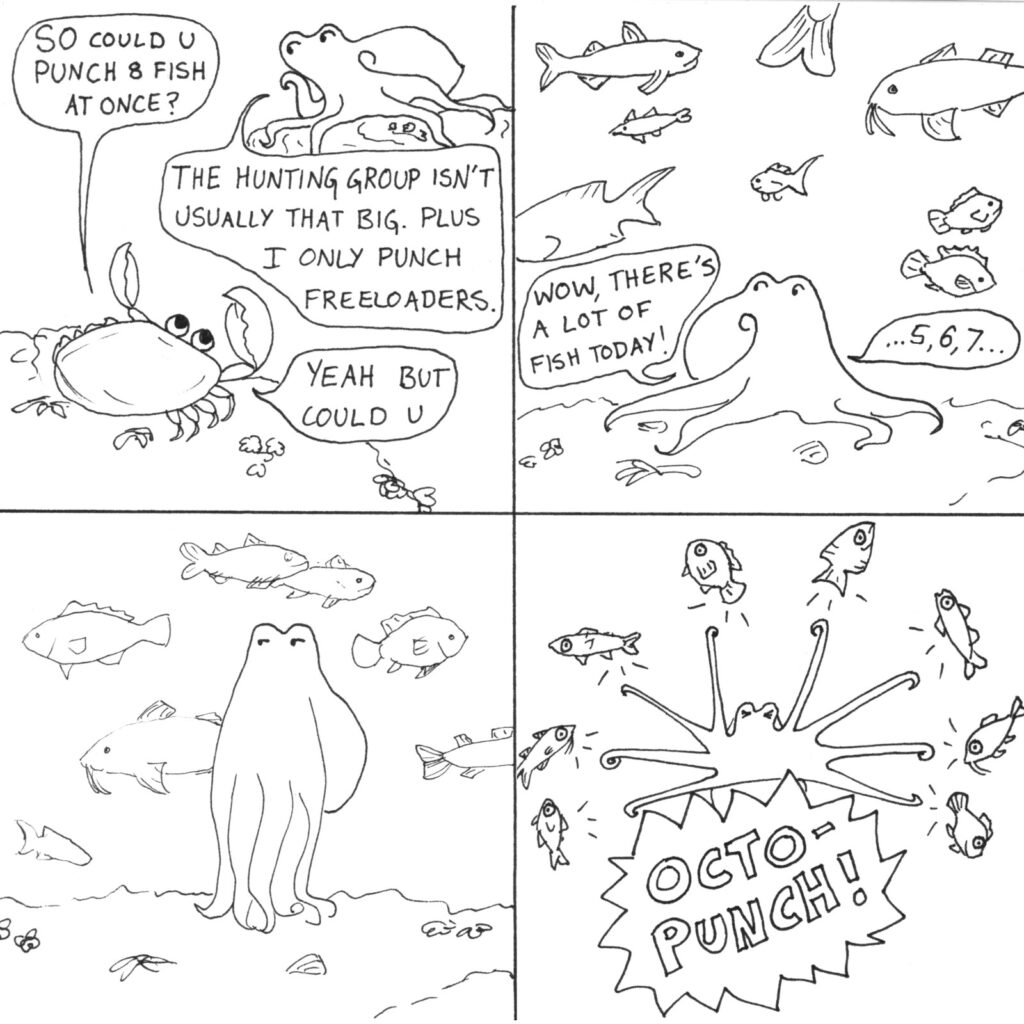
Researchers have also observed what they call collaborative hunting between octopuses and multiple fish species. They found that different species appear to take on different roles: fish often explore and indicate where prey may be, while the octopus appears to influence whether and when the group moves on (Sampaio et al. 2024). What’s fascinating is that the octopus doesn’t just move alongside the fish – it seems to respond to what they do. Sometimes it nudges or “punches” a fish that isn’t helping, steering the hunt in a more productive direction (Sampaio et al. 2021). This octopus runs a tight ship.
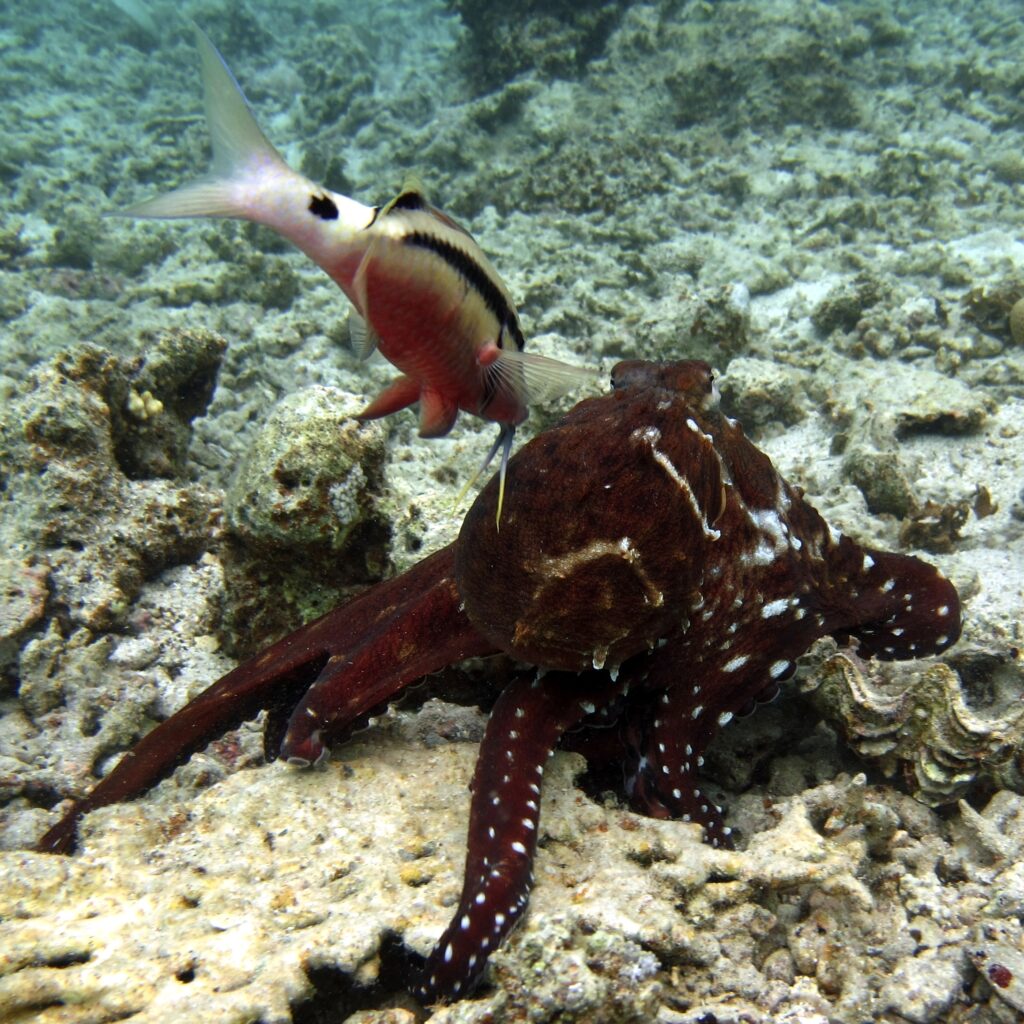
Beyond these active partnerships, other fish species play a less collaborative role, trailing behind the octopus purely as opportunistic freeloaders (Pereira et al. 2011; Somaweera and Somaweera 2021). As the octopus stirs up the substrate or reaches an arm into a crevice to flush out a crab, these followers swoop in to steal the scraps. Yet, the octopus seems to know friend from foe; it will quickly flash a stark warning signal or an aggressive, deimatic display to any fish that isn’t welcome.
The octopus’s knack for adjusting its response to different species is remarkable. Its behavior changes depending on who it is hunting with – or who is trying to steal the leftovers.
🐙 Octopus Fun Fact: In the study that first documented octo-punching, day octopuses in the Red Sea landed eight recorded punches on seven different fish species, from groupers to goatfish to a squirrelfish that got evicted from the hunt entirely! (Sampaio et al. 2021).
Cuttlefish Deception: Two Faces for Two Audiences
If imagination involves generating alternatives to the immediate reality, deception may be one of its most sophisticated expressions. Few animals illustrate this more vividly than cuttlefish.
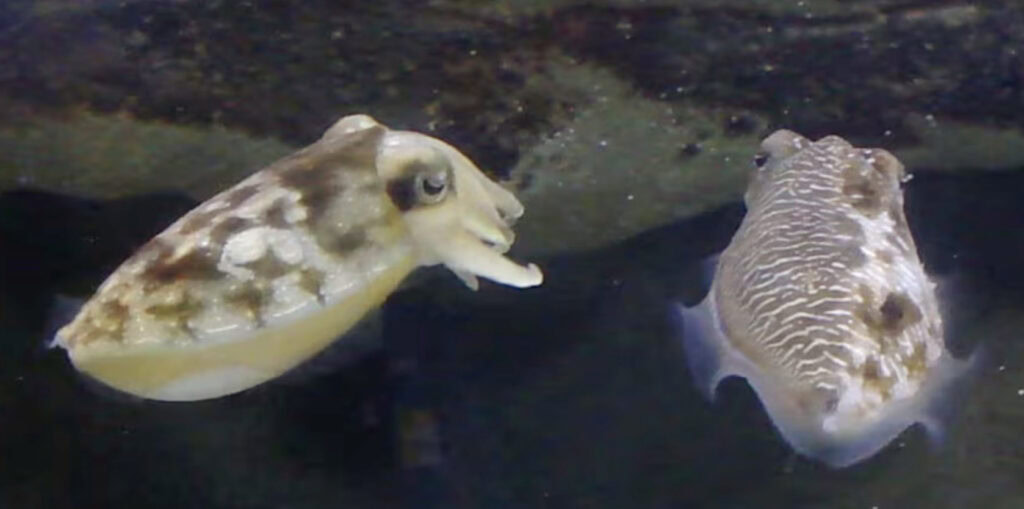
In the mourning cuttlefish (Sepia plangon), males competing for access to a female can use a remarkable tactic known as split-body mimicry. When courting a receptive female with a rival male nearby, a mourning cuttlefish may display female-like skin patterns on the side facing the rival male, while simultaneously presenting male courtship skin patterns on the side facing the female (Brown et al. 2012). In effect, it is offering two different signals at once, tailored to two different observers. Some may call this two-faced, we call it cuttlefish creativity.
By contrast, the giant Australian cuttlefish (Sepia apama) is known for full-body mimicry. This strategy is often employed by smaller males who cannot match larger rivals in direct competition. By adopting a female appearance, they can approach a female without triggering aggression from larger males. Female mimicry allows these smaller males or “sneaker males” to mate while avoiding costly conflicts (Hanlon et al. 2005).
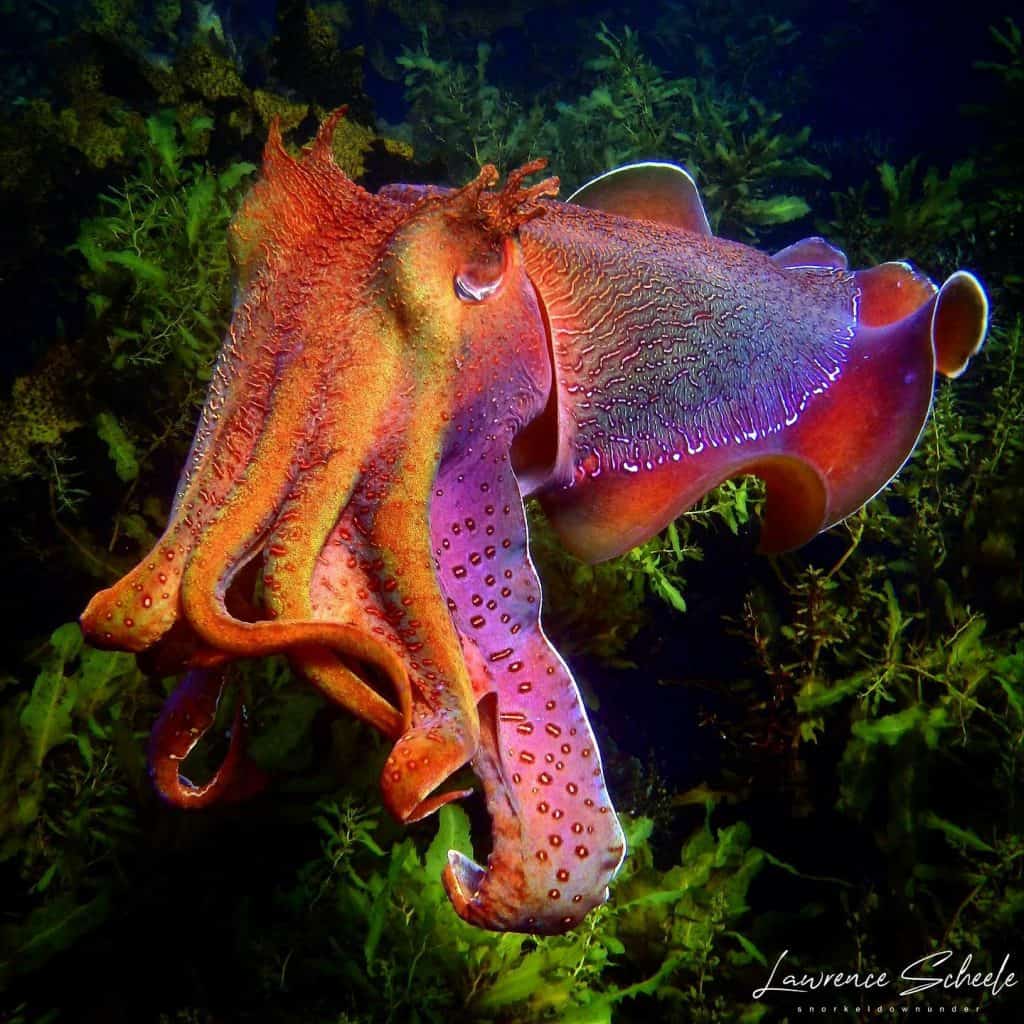
In both species, this behavior relies on exquisitely controlled skin patterning, but it may also reflect something more: sensitivity to how different individuals perceive and react to visual signals. A cuttlefish using these tactics may be doing more than simply matching background light or texture — its appearance may be adjusted based on who is watching and how they’re likely to respond

The strategic use of multiple appearances at once hints at imaginative engagement – a subtle inventiveness that lets cuttlefish steer events toward their advantage.
Why Octopus Imagination Matters (and What We Still Don’t Know)
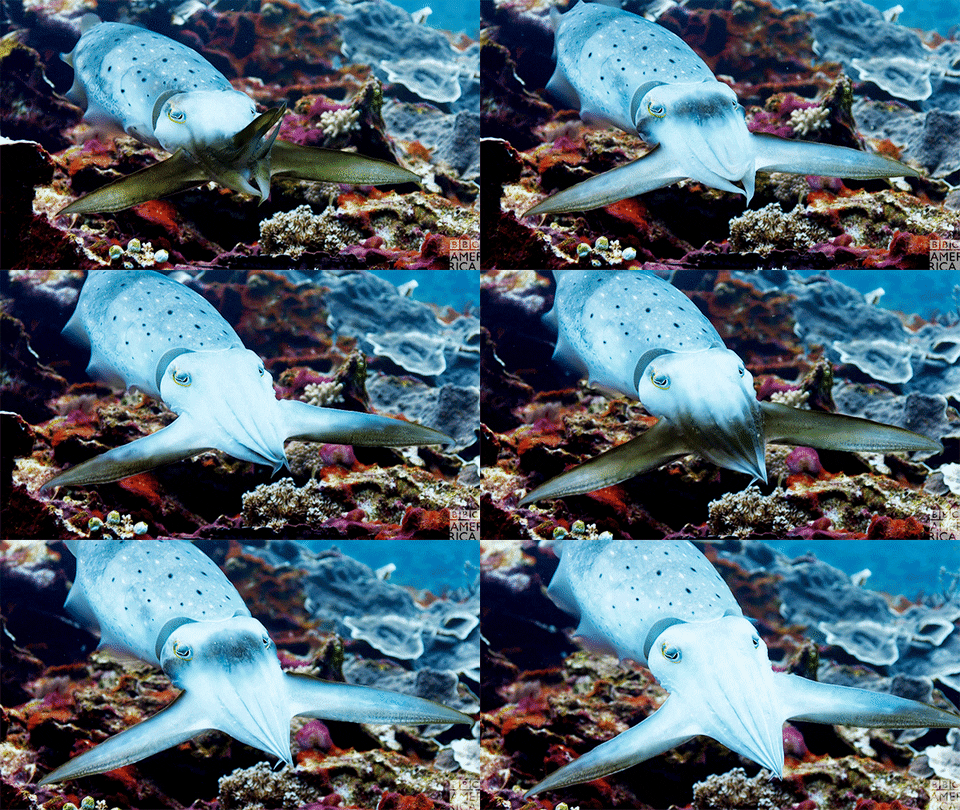
Across these examples – mimicry, tool use, collaboration, and deception – a common theme begins to emerge. Cephalopods appear capable of responding in ways that extend beyond the immediate moment, potentially drawing on expectations, anticipating possible outcomes, and adapting their behavior in innovative ways (Schnell et al. 2023).
Imagination, in this scientific sense, supports creative problem-solving when familiar strategies fall short, and it may even influence internal processes such as memory replay or sleep-related activity.
When we watch Heidi’s skin flicker with color as she sleeps, we are reminded that cognition does not always reveal itself through obvious action. Sometimes it emerges subtly – through patterns without a clear trigger.
Although much about the inner experiences of animals remains unknown, the evidence increasingly suggests that imaginative capacities can be reflected in visible behaviors.
And in cephalopods, it may be written directly onto the skin.
(The next article in this series, “Reasoning,” will explore how cephalopods draw logical connections between causes and effects to solve problems.)
The Clever Cephalopod Chronicles
- Part 1: Octopus Intelligence: How Do You Measure the IQ of an Octopus? (behavioral flexibility, and why four pillars beat a single IQ score)
- Part 2: Can an Octopus Imagine? (you are here)
- Part 3: Reasoning (coming soon)
Anderson, R.C.; Mather, J.A.; Monette, M.Q. & Zimsen, S.R.M. (2010). “Octopuses (Enteroctopus dofleini) Recognize Individual Humans.” Journal of Applied Animal Welfare Science. 13 (3): 261–272. doi:10.1080/10888705.2010.483892
Brown, C.; Garwood, M.P. & Williamson, J.E. (2012). “It pays to cheat: tactical deception in a cephalopod social signalling system.” Biology Letters. 8 (5): 729–732. doi:10.1098/rsbl.2012.0435
Finn, J.K.; Tregenza, T. & Norman, M.D. (2009). “Defensive tool use in a coconut-carrying octopus.” Current Biology. 19 (23): R1069–R1070. doi:10.1016/j.cub.2009.10.052
Hanlon, R.T.; Conroy, L.-A. & Forsythe, J.W. (2007). “Mimicry and foraging behaviour of two tropical sand-flat octopus species off North Sulawesi, Indonesia.” Biological Journal of the Linnean Society. 93 (1): 23–38. doi:10.1111/j.1095-8312.2007.00948.x
Hanlon, R.T.; Naud, M.-J.; Shaw, P.W. & Havenhand, J.N. (2005). “Transient sexual mimicry leads to fertilization.” Nature. 433 (7023): 212–212. doi:10.1038/433212a
Medeiros, S.L.D.S.; Paiva, M.M.M.D.; Lopes, P.H.; Blanco, W.; Lima, F.D.D.; Oliveira, J.B.C.D.; Medeiros, I.G.; Sequerra, E.B.; de Souza, S.; Leite, T.S. & Ribeiro, S. (2021). “Cyclic alternation of quiet and active sleep states in the octopus.” iScience. 24 (4): 102223. doi:10.1016/j.isci.2021.102223
Norman, M.D.; Finn, J. & Tregenza, T. (2001). “Dynamic mimicry in an Indo–Malayan octopus.” Proceedings of the Royal Society of London. Series B: Biological Sciences. 268 (1478): 1755–1758. doi:10.1098/rspb.2001.1708
Pereira, P.H.C.; de Moraes, R.L.G.; Feitosa, J.L.L. & Ferreira, B.P. (2011). “‘Following the leader’: first record of a species from the genus Lutjanus acting as a follower of an octopus.” Marine Biodiversity Records. 4. doi:10.1017/s1755267211000856
Pophale, A.; Shimizu, K.; Mano, T.; Iglesias, T.L.; Martin, K.; Hiroi, M.; Asada, K.; Andaluz, P.G.; Van Dinh, T.T.; Meshulam, L. & Reiter, S. (2023). “Wake-like skin patterning and neural activity during octopus sleep.” Nature. 619 (7968): 129–134. doi:10.1038/s41586-023-06203-4
Sampaio, E.; Seco, M.C.; Rosa, R. & Gingins, S. (2021). “Octopuses punch fishes during collaborative interspecific hunting events.” Ecology. 102 (3). doi:10.1002/ecy.3266
Sampaio, E.; Sridhar, V.H.; Francisco, F.A.; Nagy, M.; Sacchi, A.; Strandburg-Peshkin, A.; Nührenberg, P.; Rosa, R.; Couzin, I.D. & Gingins, S. (2024). “Multidimensional social influence drives leadership and composition-dependent success in octopus–fish hunting groups.” Nature Ecology & Evolution. 8 (11): 2072–2084. doi:10.1038/s41559-024-02525-2
Schnell, A.K.; Farndale Wright, N.R. & Clayton, N.S. (2023). “The Inner Lives of Cephalopods.” Integrative And Comparative Biology. 63 (6): 1298–1306. doi:10.1093/icb/icad122
Somaweera, R. & Somaweera, R. (2021). “Nuclear–follower foraging behaviour between Western Australian common octopus and brown-spotted wrasse.” Marine and Freshwater Research. 72 (11): 1679–1681. doi:10.1071/mf21059
Vail, A.L.; Manica, A. & Bshary, R. (2013). “Referential gestures in fish collaborative hunting.” Nature Communications. 4 (1). doi:10.1038/ncomms2781

Dr. Alexandra Schnell is a marine biologist, comparative psychologist, and National Geographic Explorer whose research explores the evolution of intelligence in animals. A Visiting Scholar at the University of Cambridge, she studies learning, memory, and problem-solving in cephalopods. Alex’s pioneering work revealed that cuttlefish can remember past experiences and even delay gratification- the first evidence of such complex cognition in any invertebrate.
She is a National Geographic Wayfinder Award recipient and is currently developing a conflict-resolution toolkit designed to reduce human–wildlife conflict by promoting understanding through shared sentience. Her research has also informed animal welfare legislation, including the UK’s Animal Welfare (Sentience) Act.
Beyond research, Alex is passionate about making science accessible. She was the lead storyteller and producer of Secrets of the Octopus (National Geographic/Disney+) and continues to merge science and storytelling to inspire empathy, curiosity, and protection for the natural world.